Chimney Flashing Photo and Description Page

Updated 10-18-2009

Company
Profile
Roof Caps Chimney
Caps
Scuppers Gutters Shipping

Contact Info

General information about roof flashing

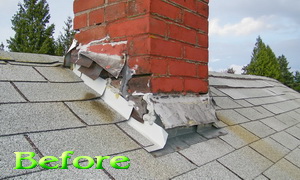
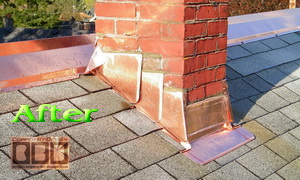
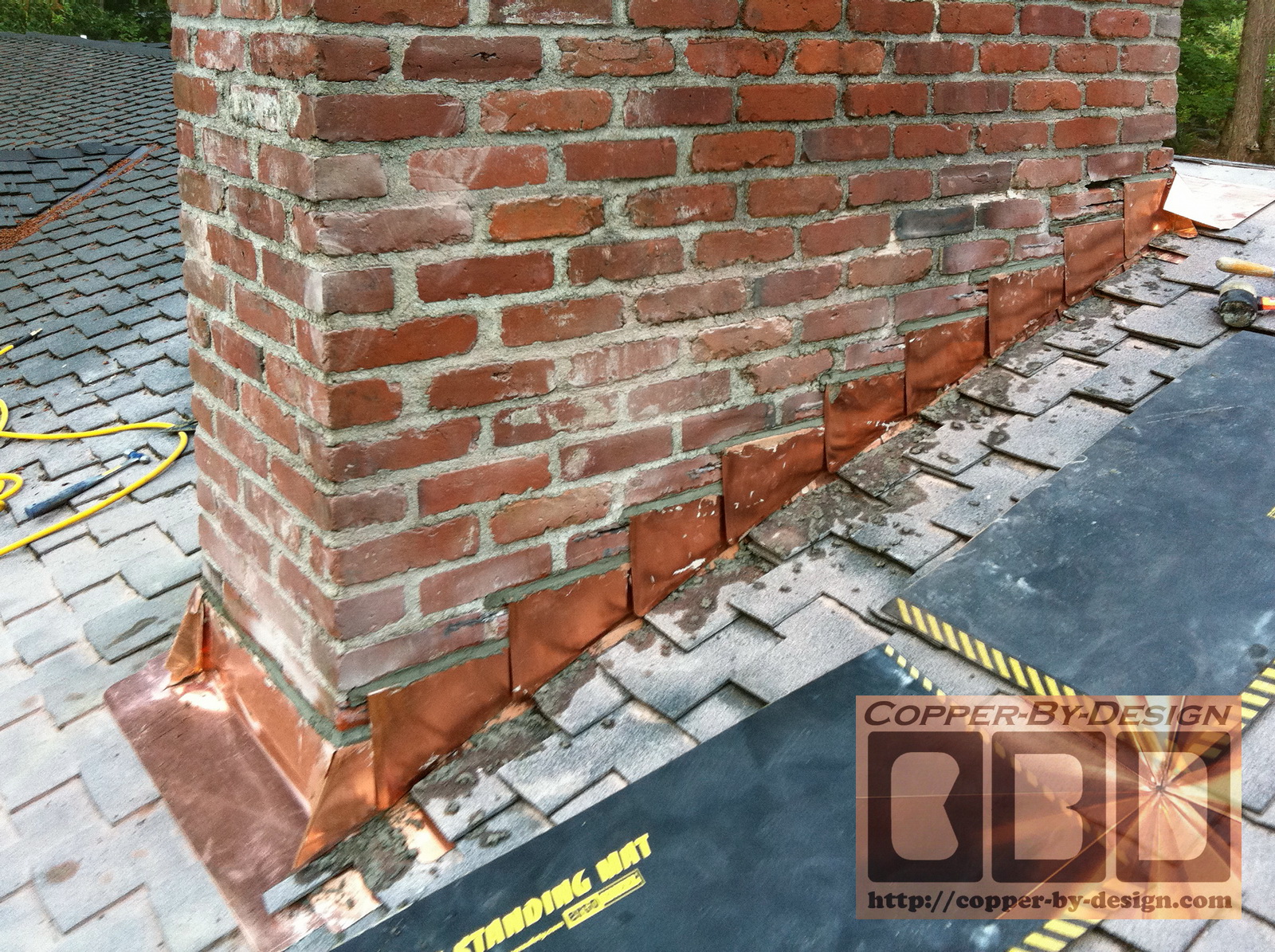
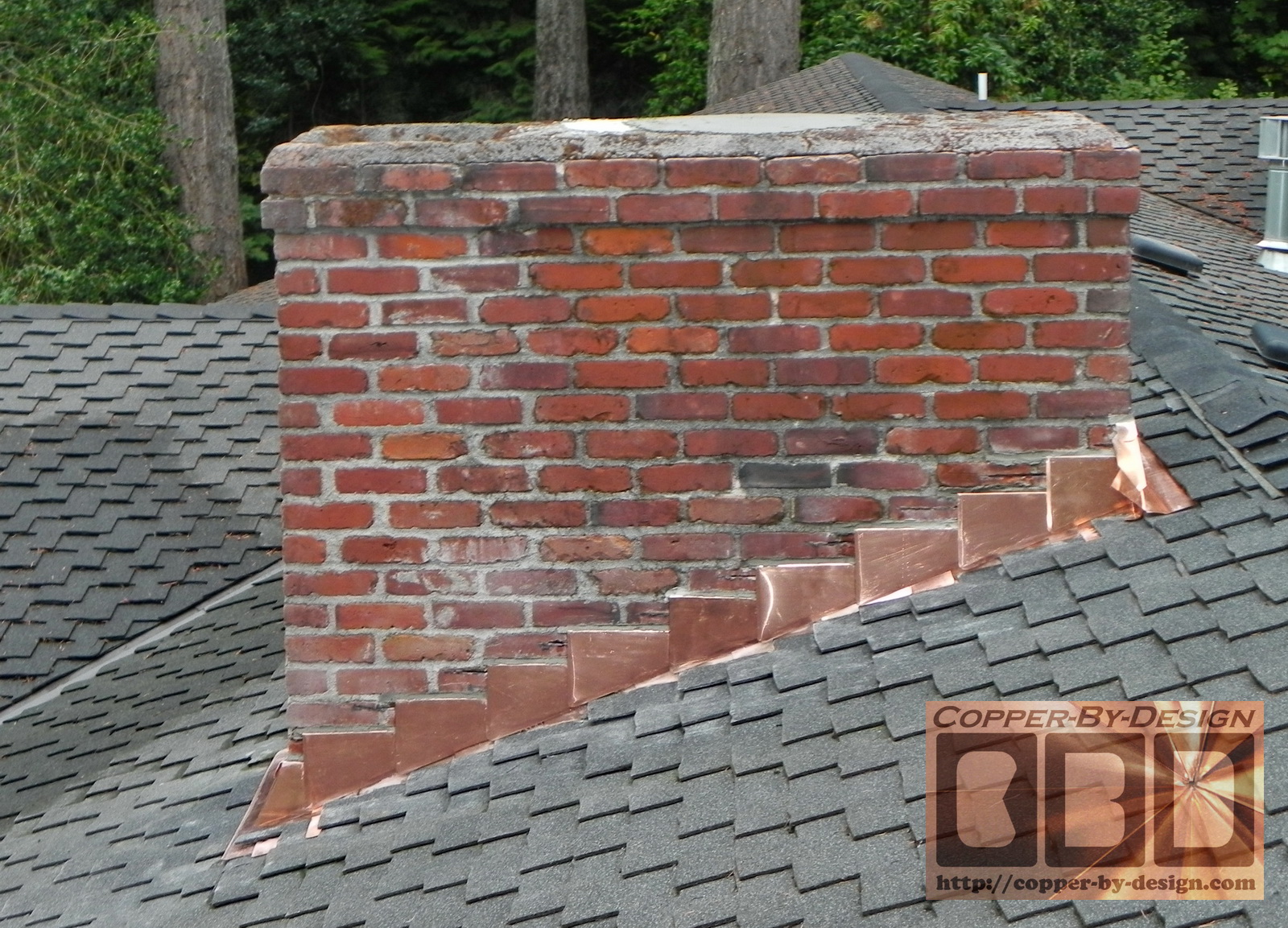
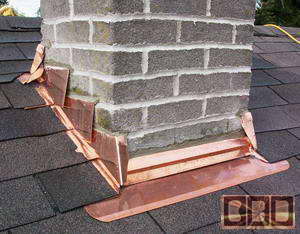
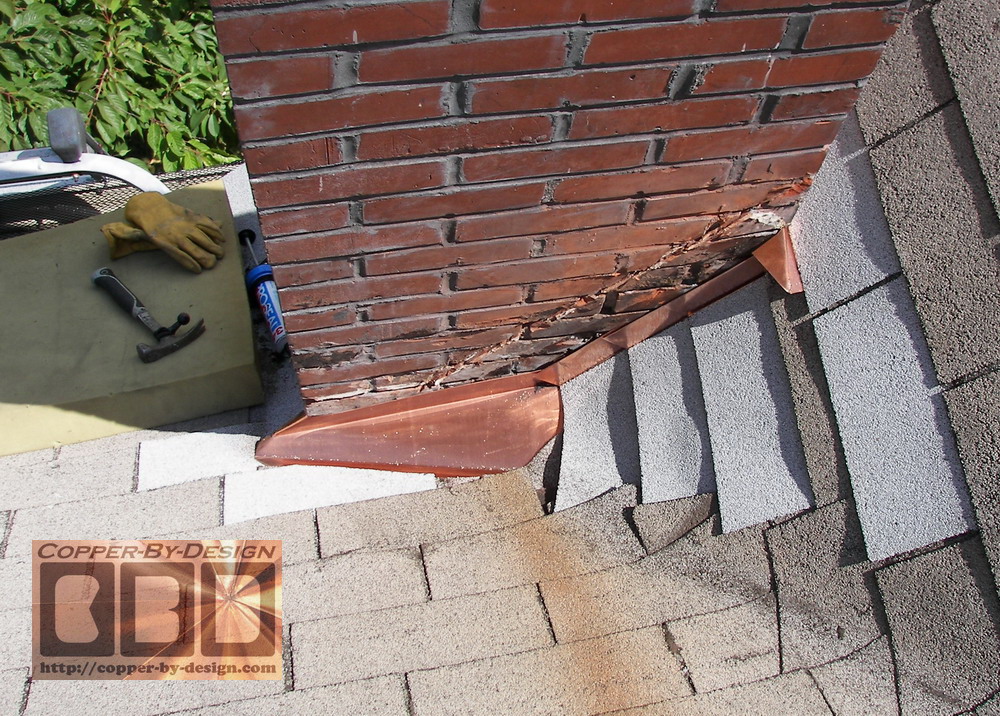
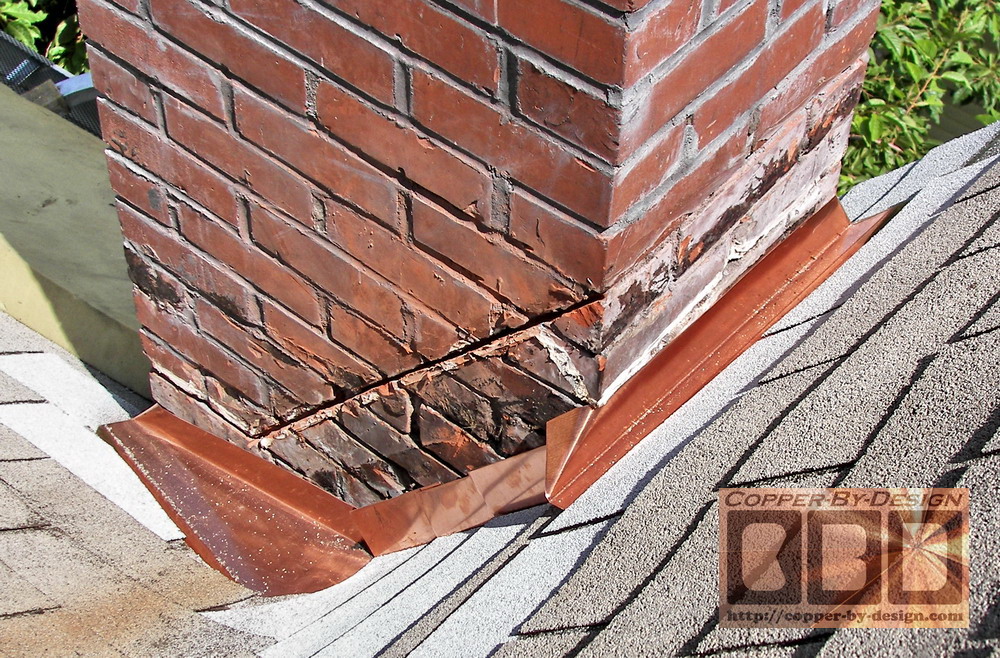
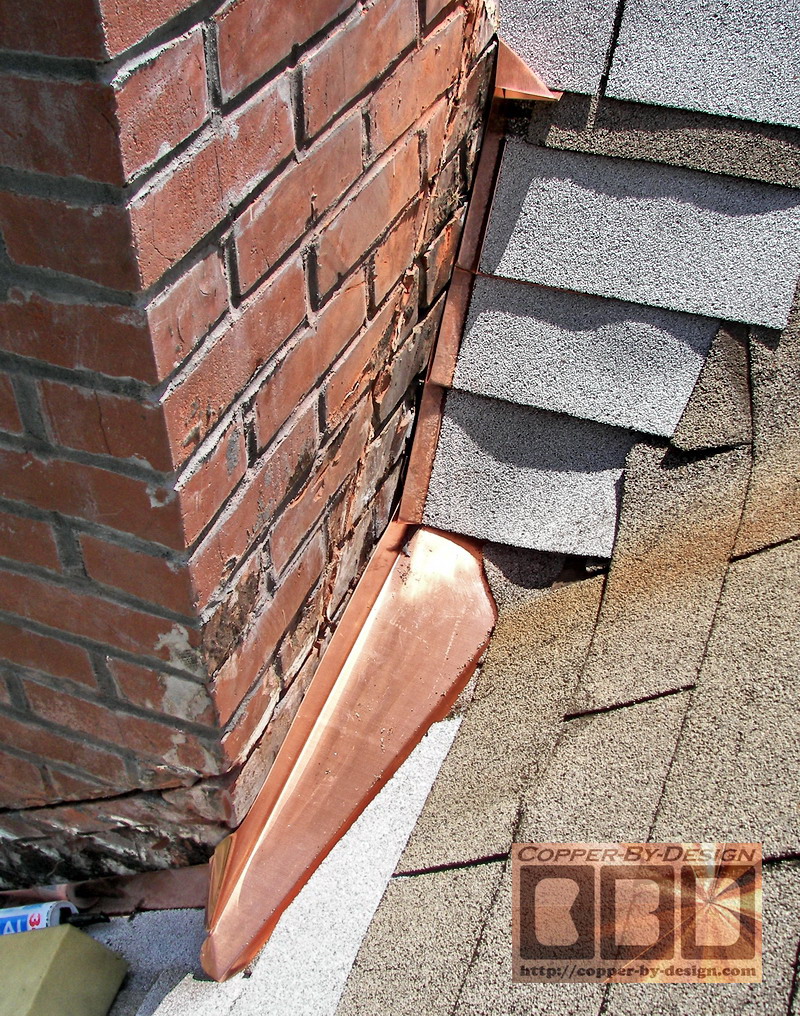
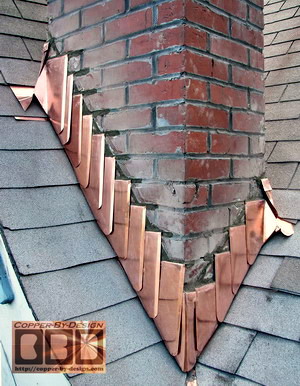
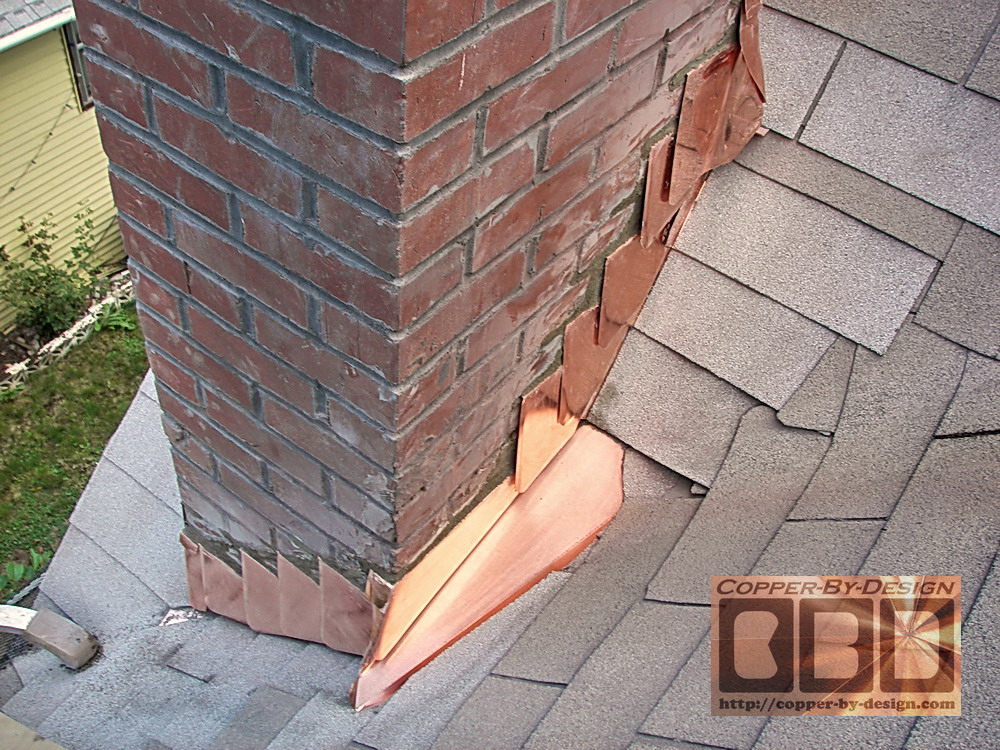
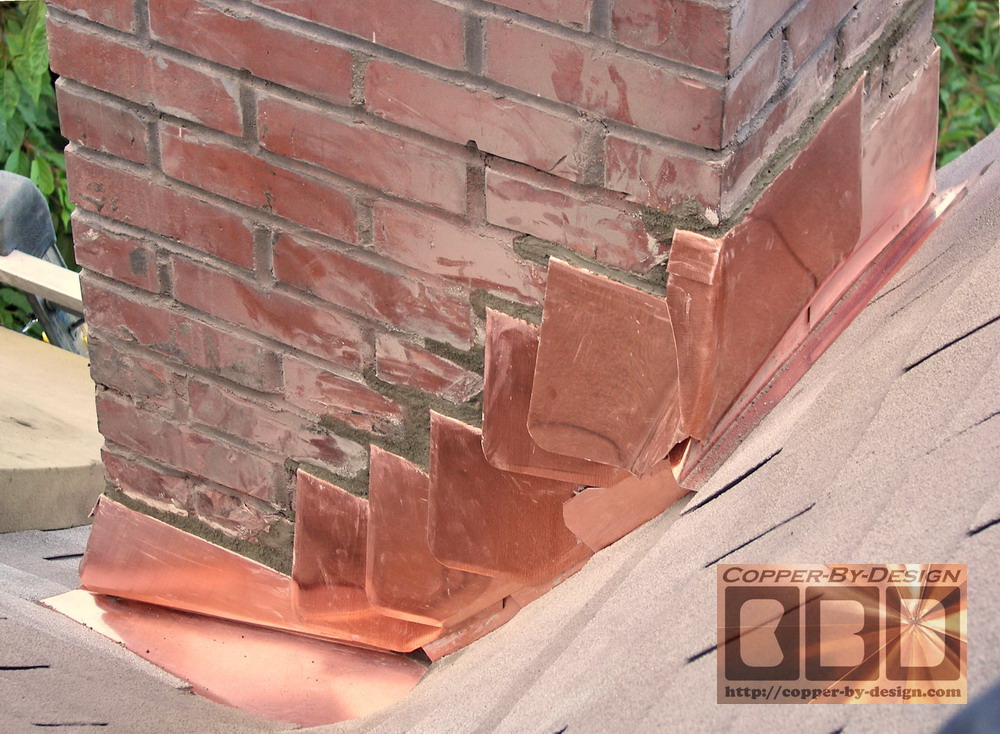
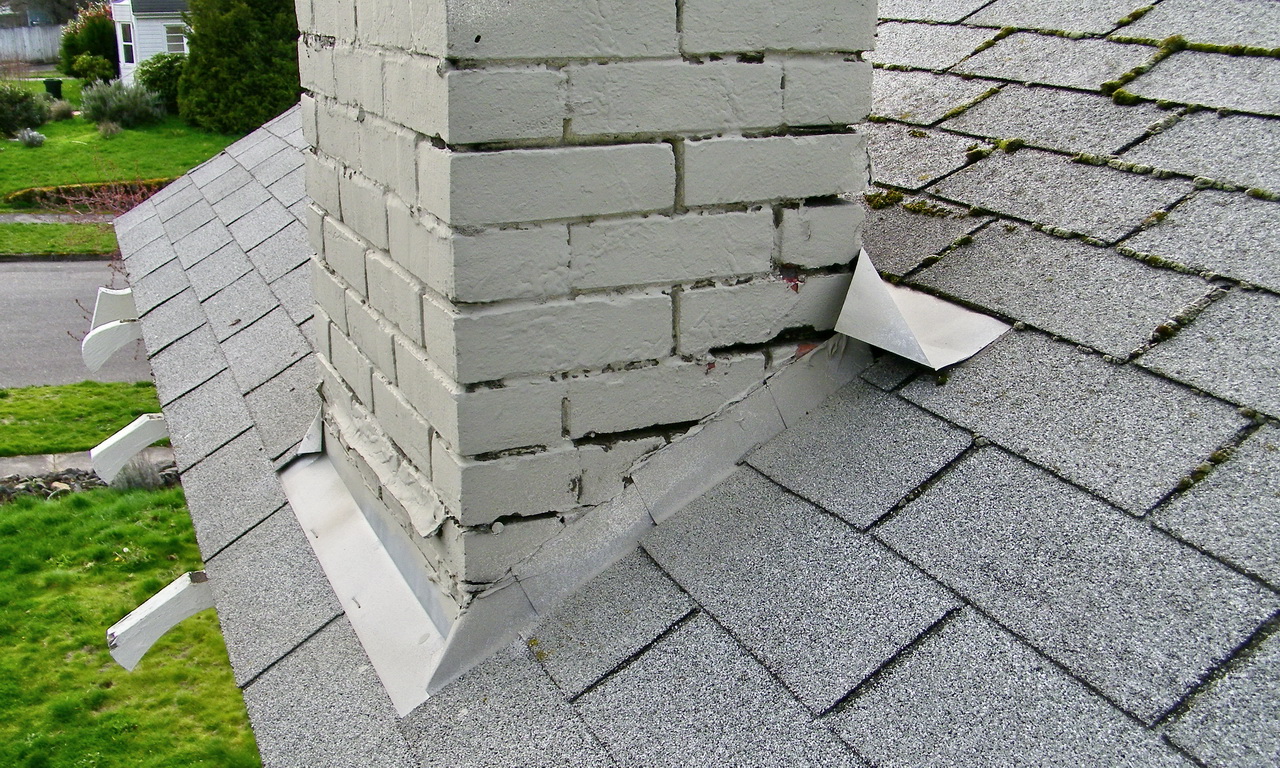
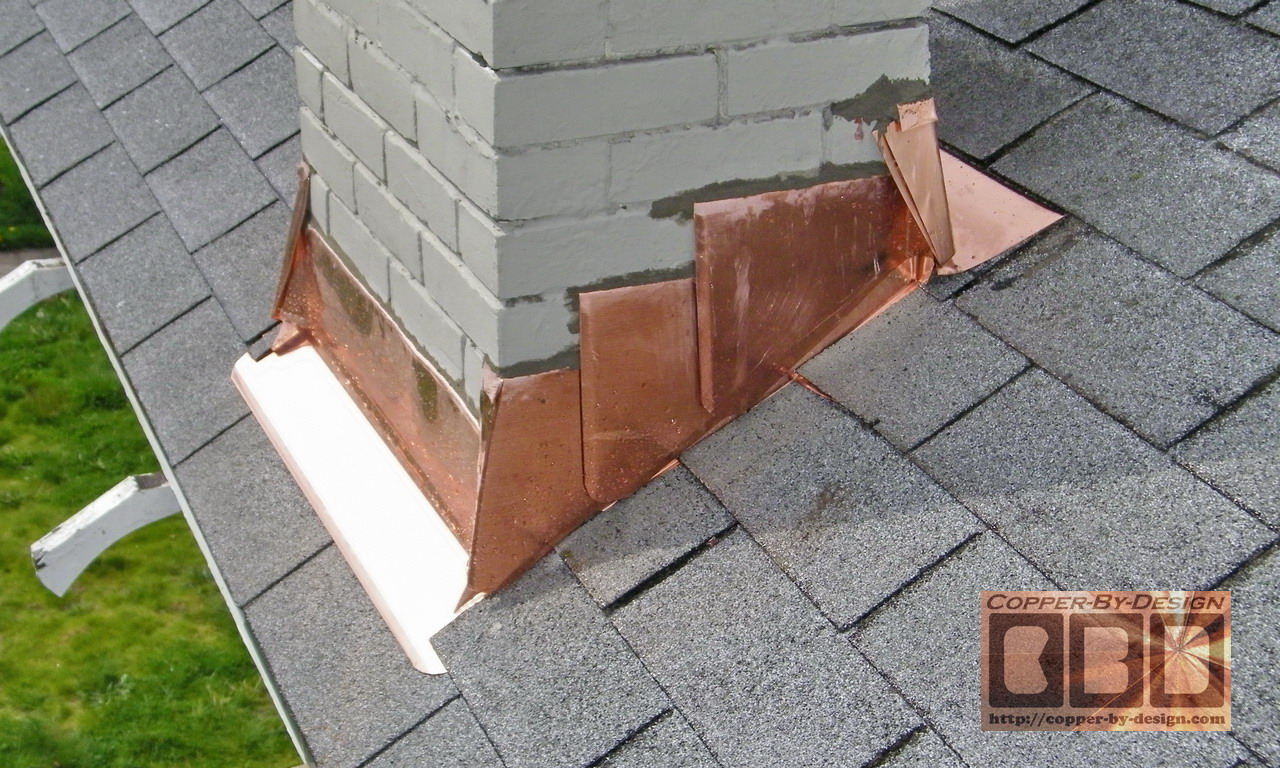
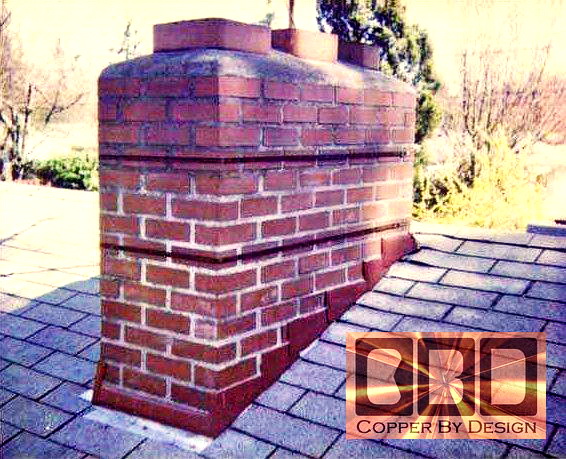
Below are a few examples of masonry work & chimney flashing I've done

Common Problems With Roof Flashing Work I've Seen:
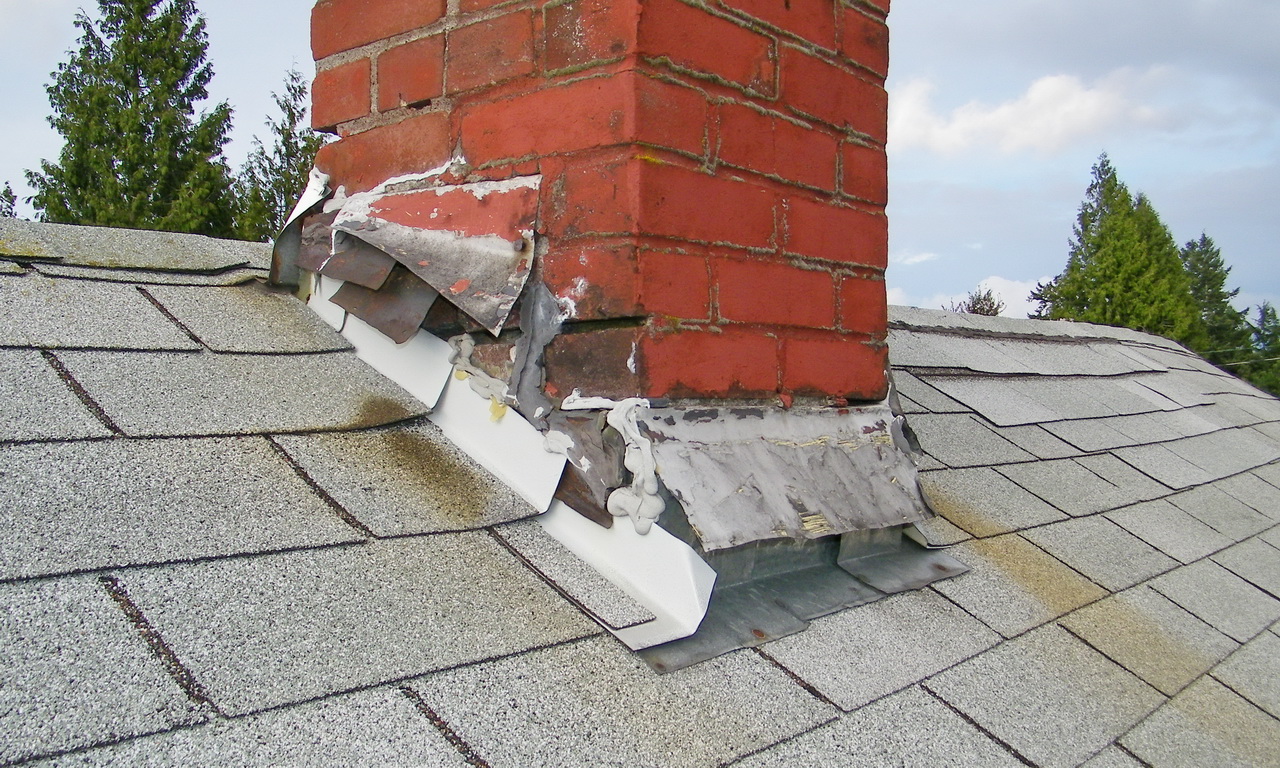
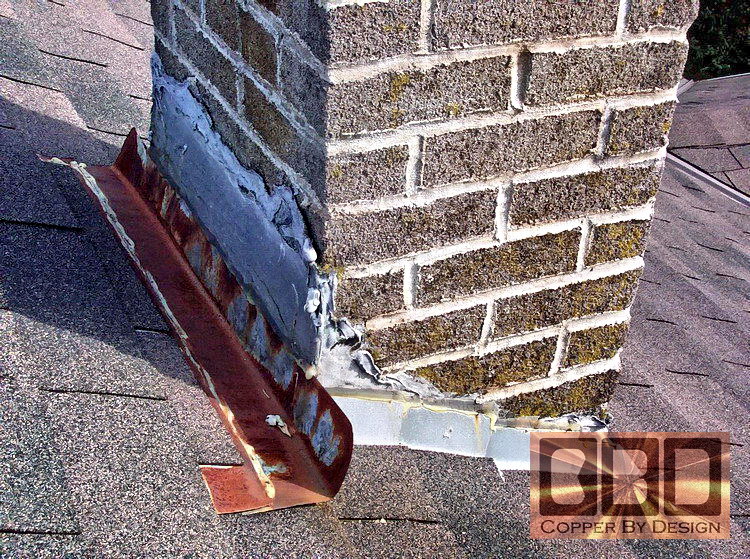
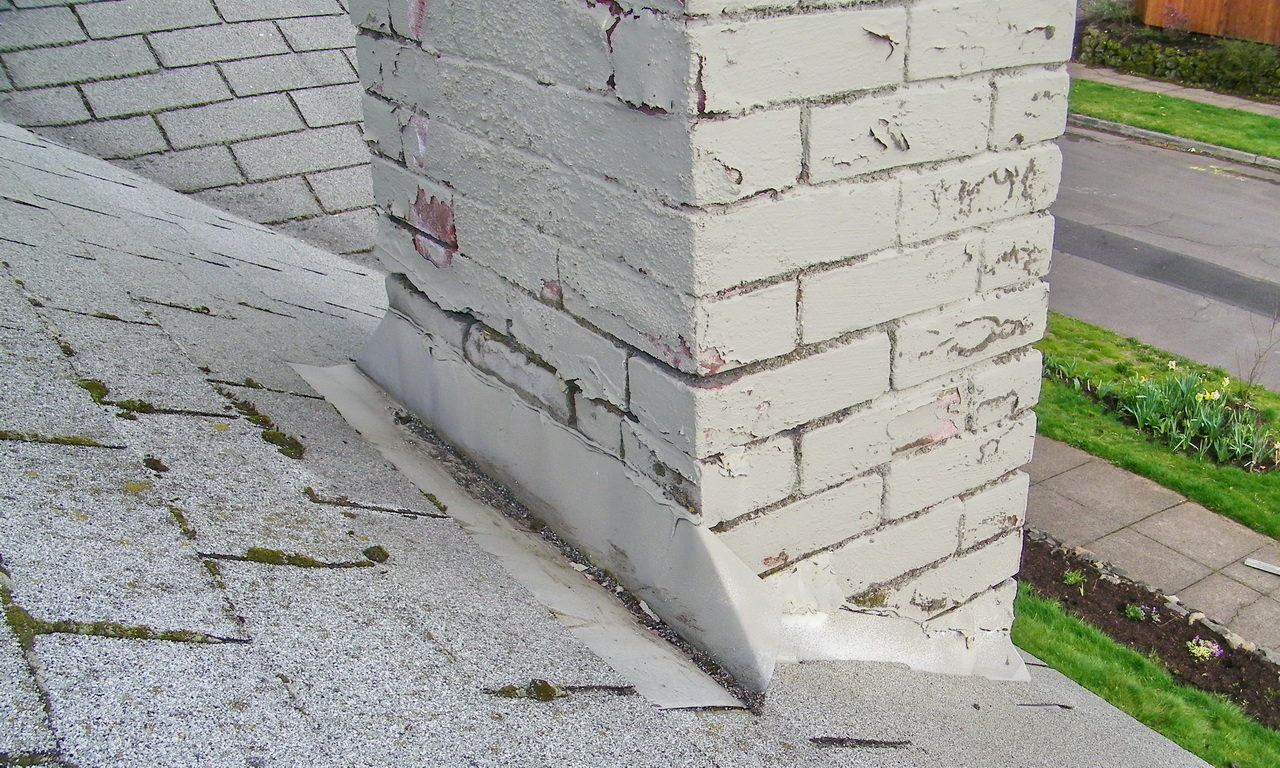
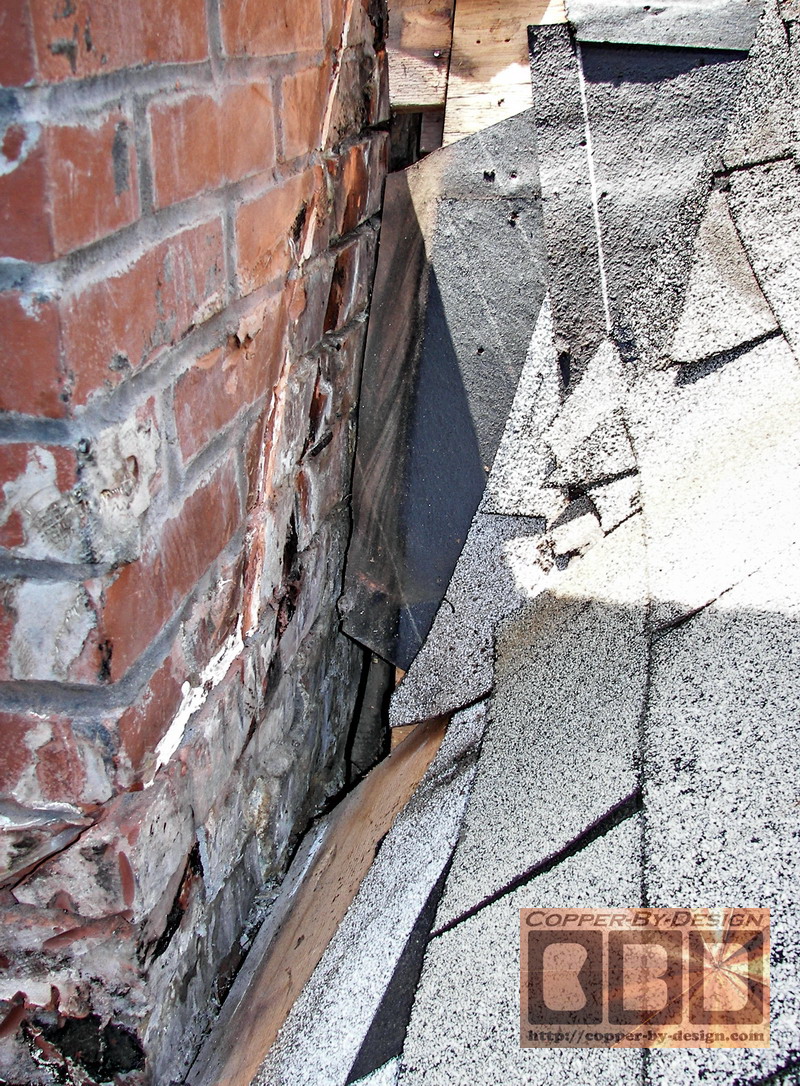
Clearly the #1 cause of roof failure is a flashing problem. From what I have seen from crawling up on several thousand roofs over the last 20 years in most cases the roofing contractor's workers will still not re-flash those problem areas the right way, if at all, and the Homeowner is cheated yet again. I have yet to see evidence of a decent roofer. No joke. Sadly ethical responsibility seems to be a thing of the past. Improper roof flashing with the use of just cheap steel is the standard across the Country and will not even last as long as inexpensive 25 year roofing shingles. From what I have seen chimney flashing is the most poorly re-flashed area of the roof. Especially when in many cases it was not re-flashed at all when the house was last re-roofed. I have personally seen thousands of examples of this close-up. 

Worse yet is how many homeowners are conned into paying to fully re-roofing their house because of these flashing leaks, instead of just replacing that flashing. These fancy talking salesman are much more motivated to sell you a whole re-roofing to unsuspecting Homeowners to make that big ticket sale, and in most cases they again will do this new work without the benefit of using rust-free metal like aluminum or copper. In many cases not even bothering to re-flash the problem area and failing to solve the actual problem, which is one of the main reasons liability insurance for roofers is very hard to get and extremely costly these days, being around 500% more than any other type of construction work.

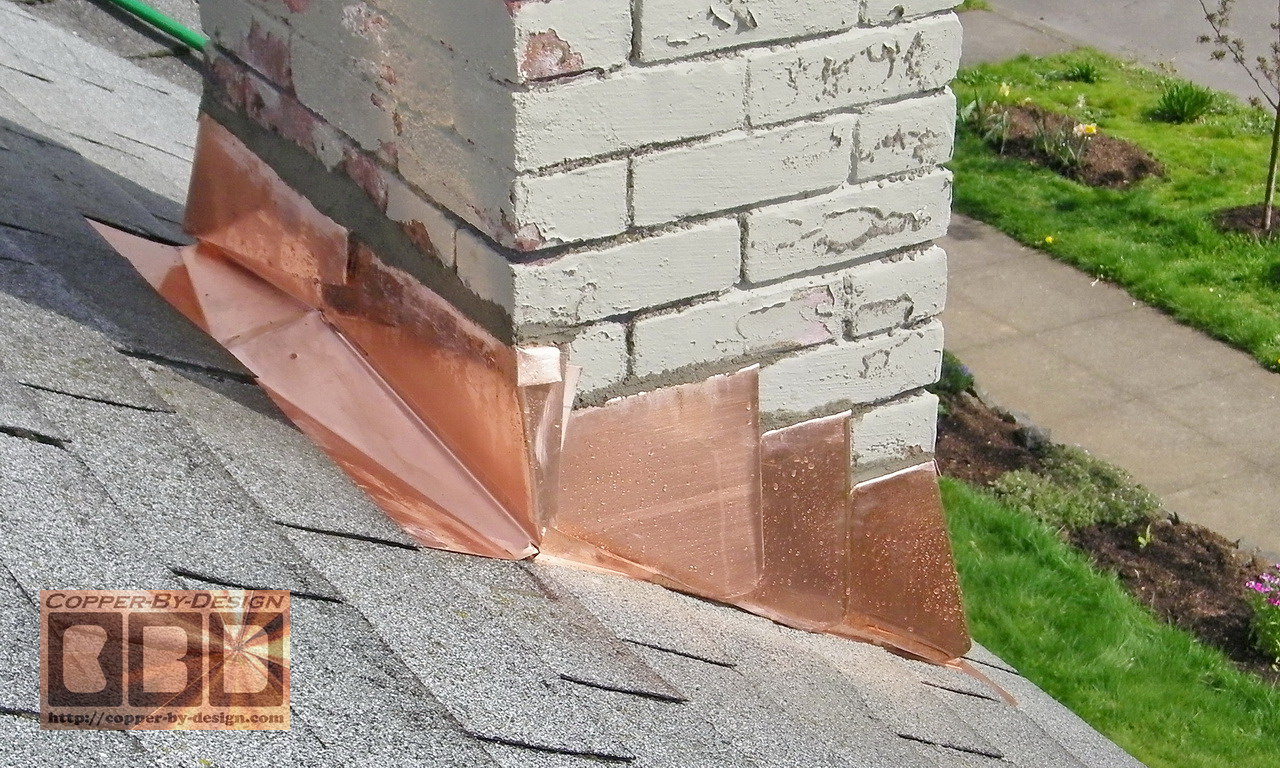
Most of roof flashing can be replaced without re-roofing the whole house (as seen above), but of course that is far less profitable for a roofing contractor, so that is rarely offered as an option for your consideration.  These roofers know better, but they still do the same kind of roofing with this cheap steel flashing that they just tore off  of your house, that they know will fail in short order. It is said this is the definition of insanity.

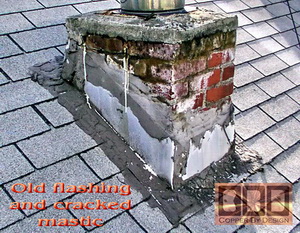
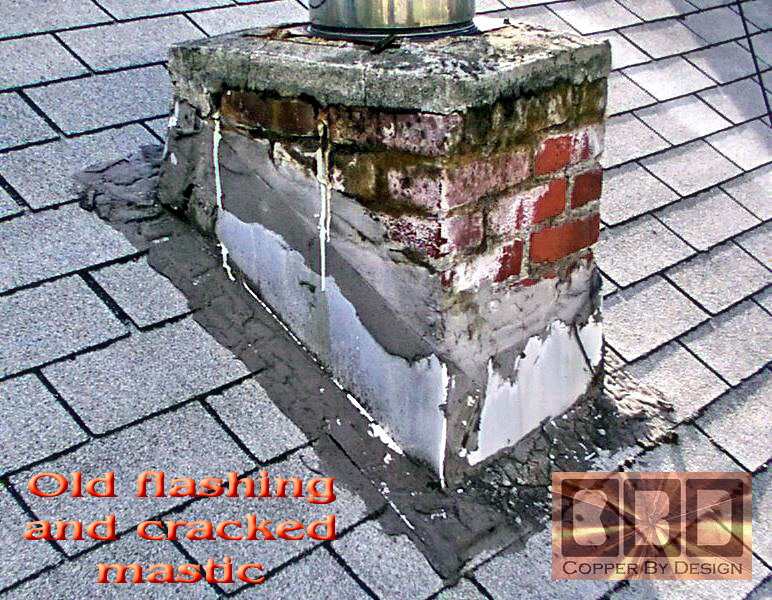
If that were not bad enough; Instead of flashing areas with metal; they will use the cheapest caulking (called mastic) smeared around those problem areas. Mastic is just fibered tar with no UV protection. This will usually get the roof past their minimum required 1 year warranty the Construction Contractors Boards require of any contractor, but not much more. This mastic tar will become brittle and crack, and peal away within a few years. If it were to be inspected by a State Code Enforcement Inspector, it would not be approved. They are not to use mastic anywhere on a roof. That is a clear sign it was not properly flashed. Mastic is only to be used as an emergency patch to pacify the leak until a proper fix can be made.

We know this to be an intentional crime of roofing contractors, since pretty much any roofer knows very well how common these issues are to find when doing a tear-off of an old roof; i.e. very rusty steel flashing on the roof.  When they tear into a bad roof for replacement, it tells a story of why this roof failed.  They would have to be complete morons to not see the evidence in front of them. Yet, they continue to ignore this evidence and continue do shoddy work, since in most cases they are not required to file for a building permit to replace your roof, and therefore do not have to worry about an inspector double checking their work.

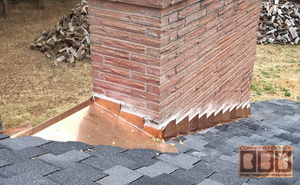
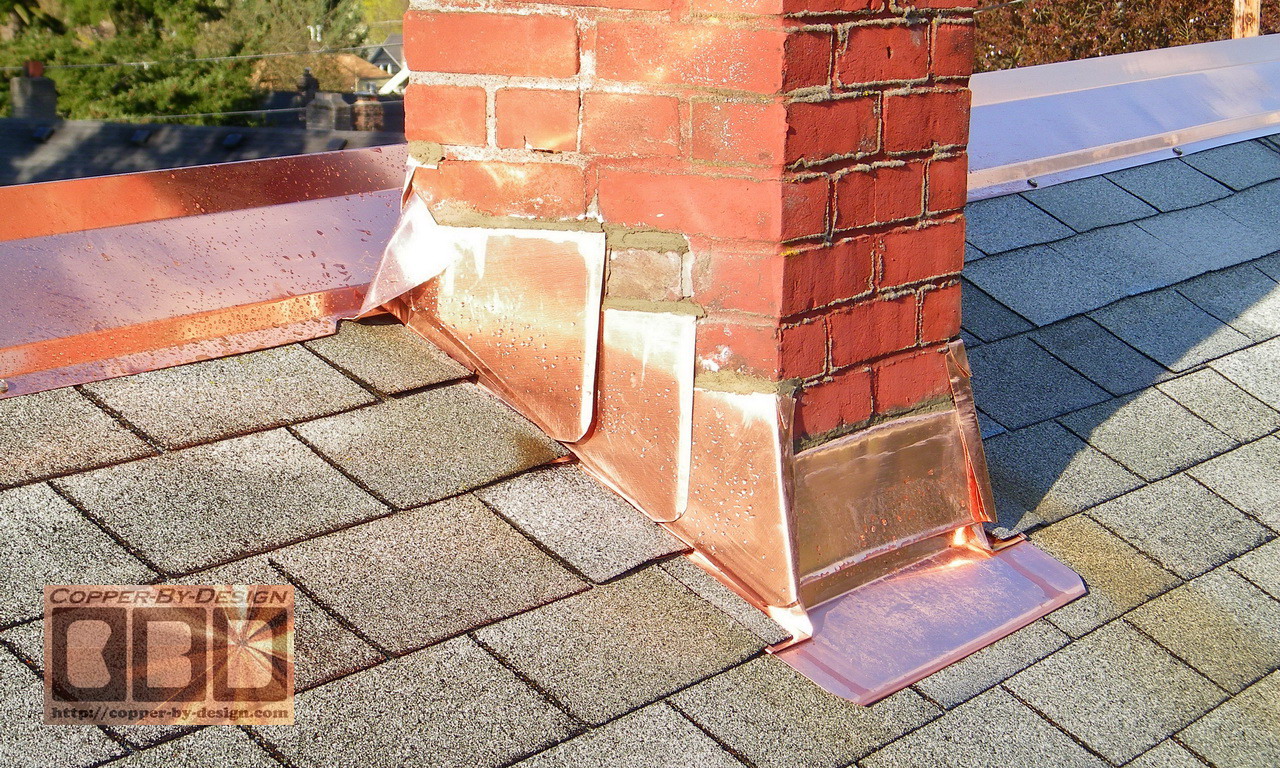
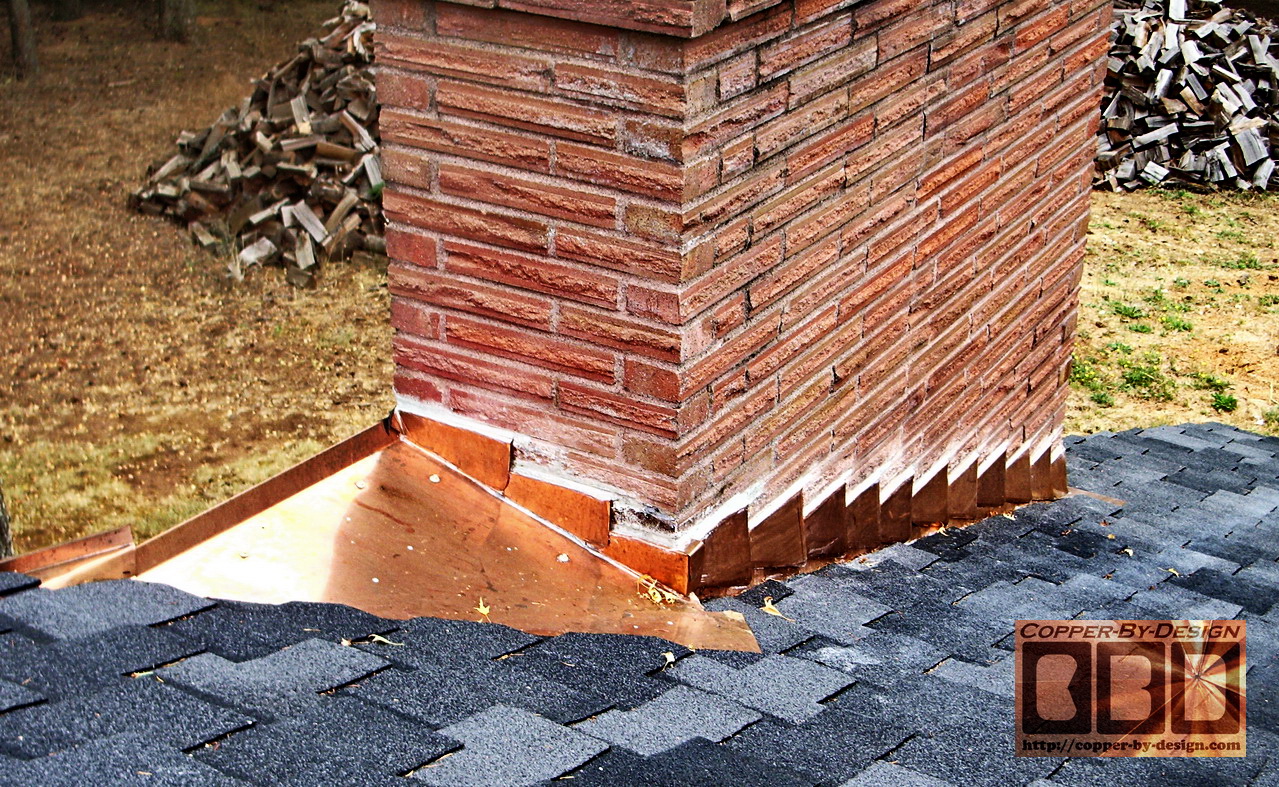
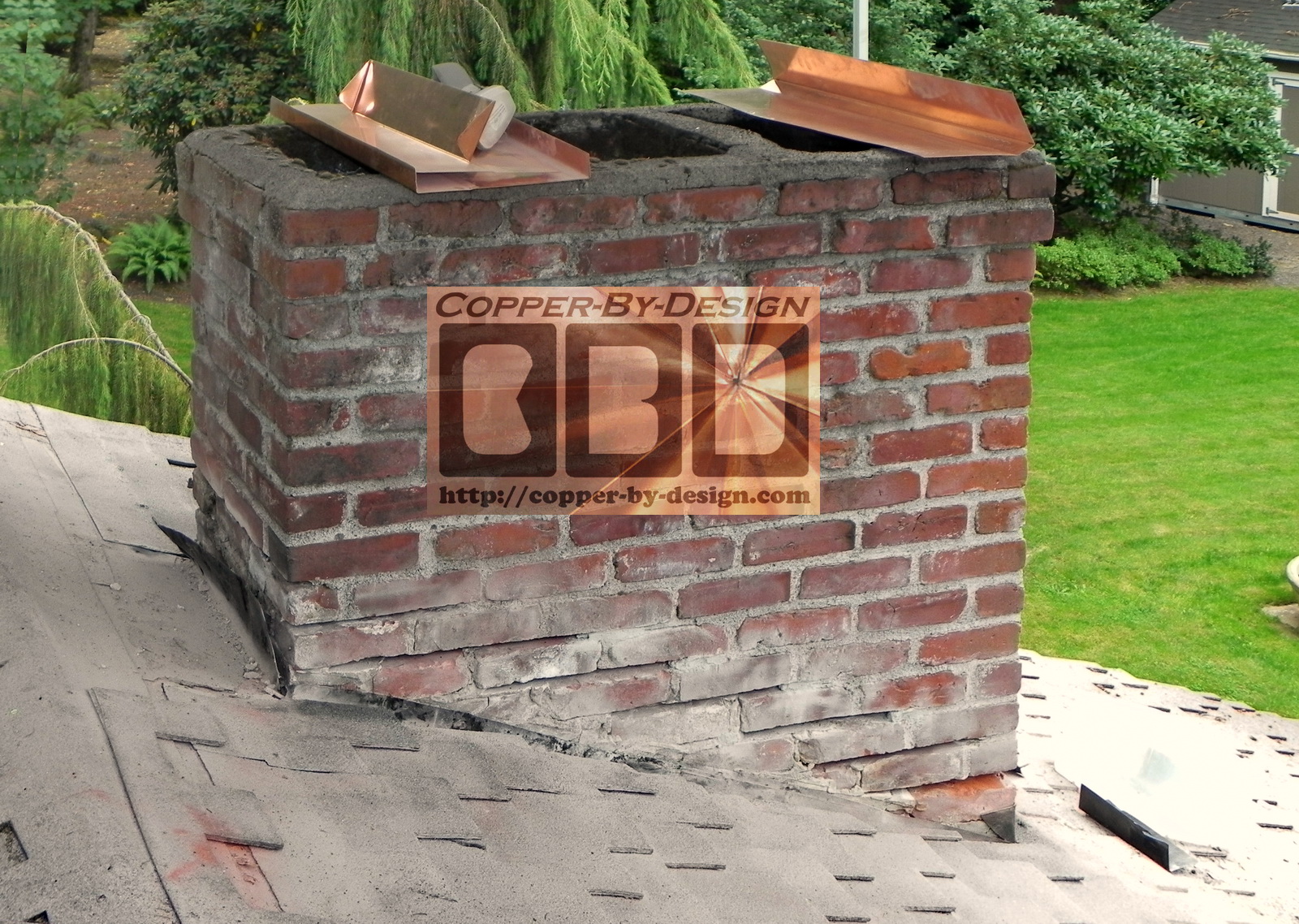
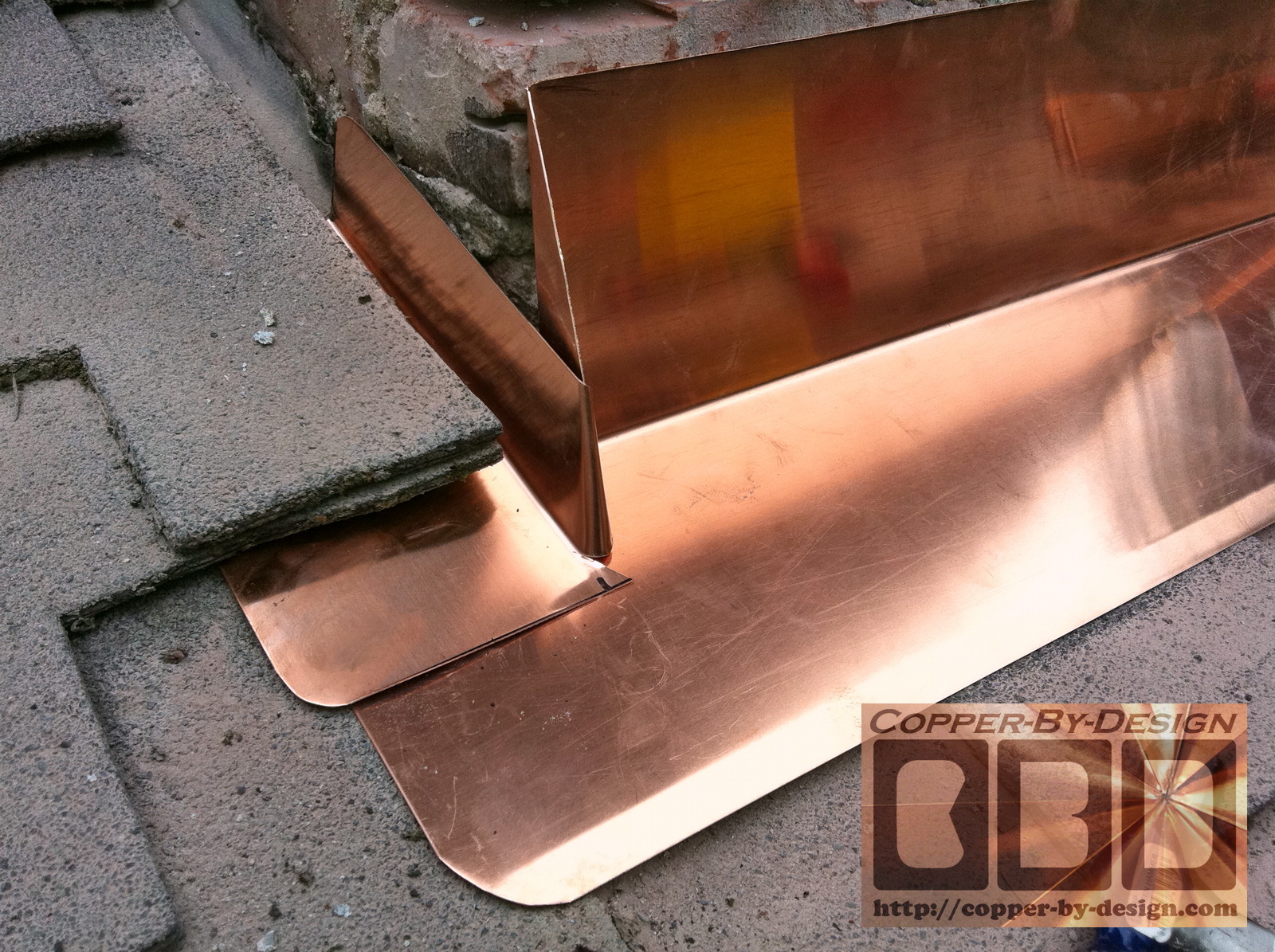
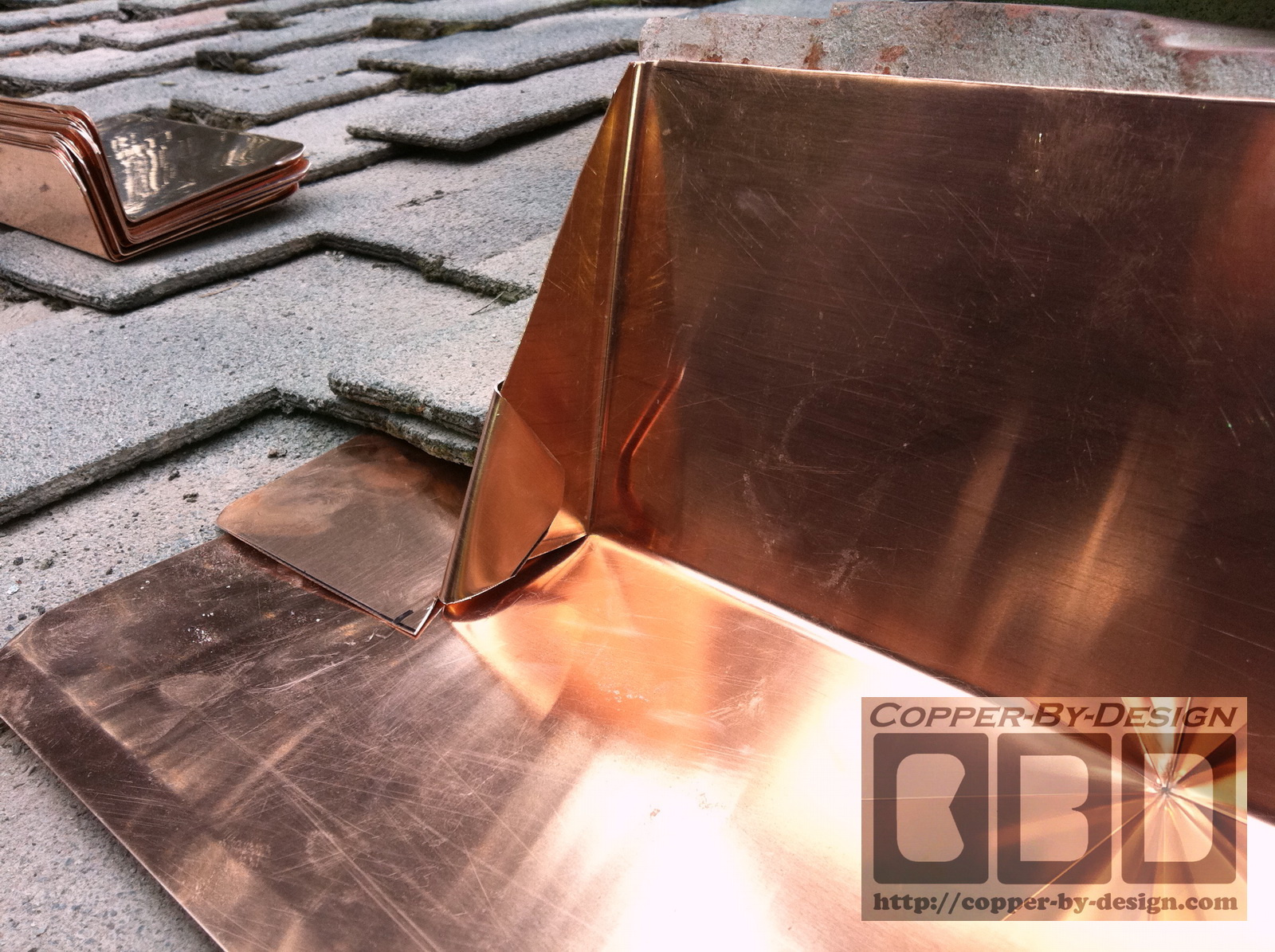
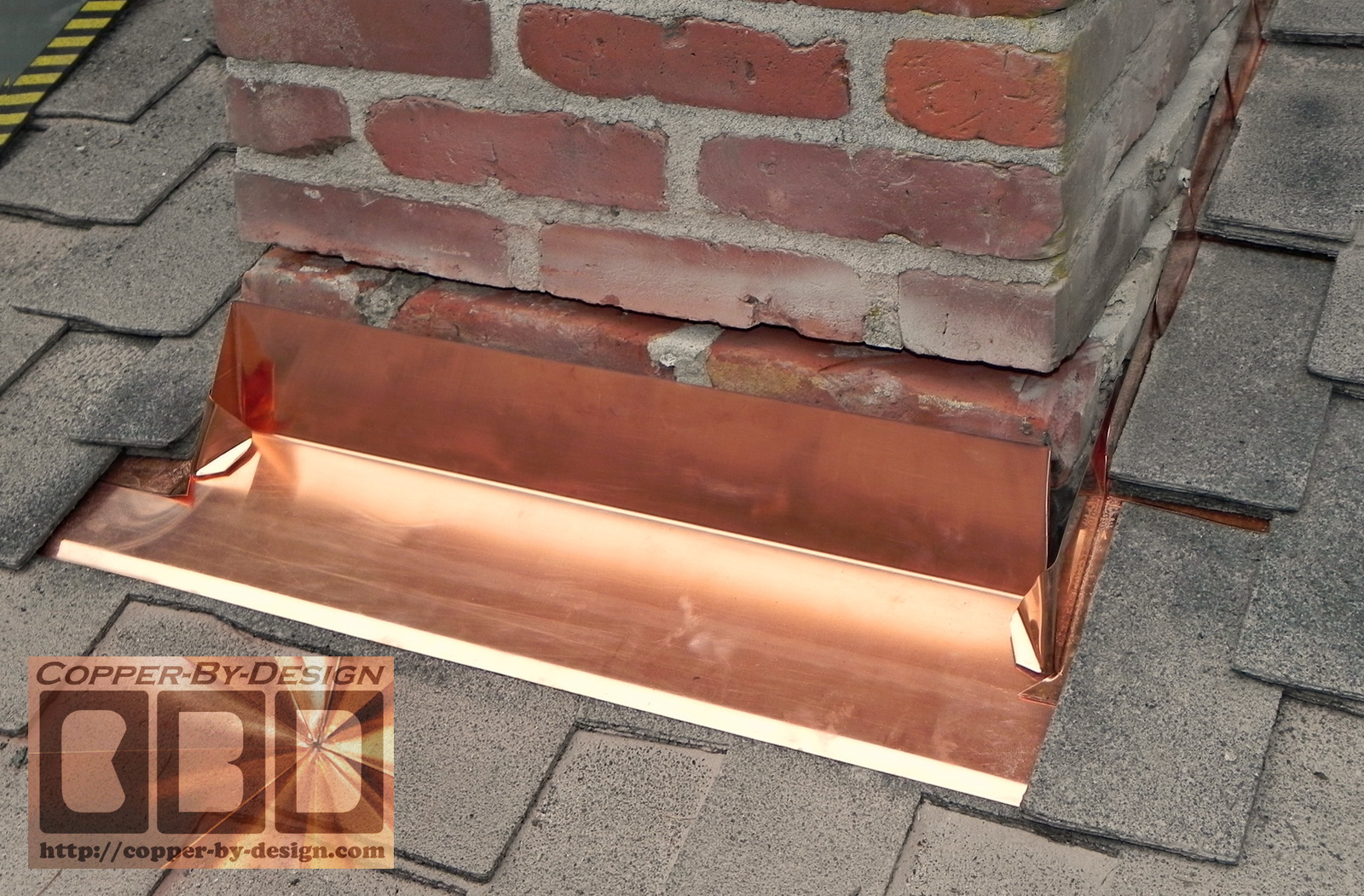
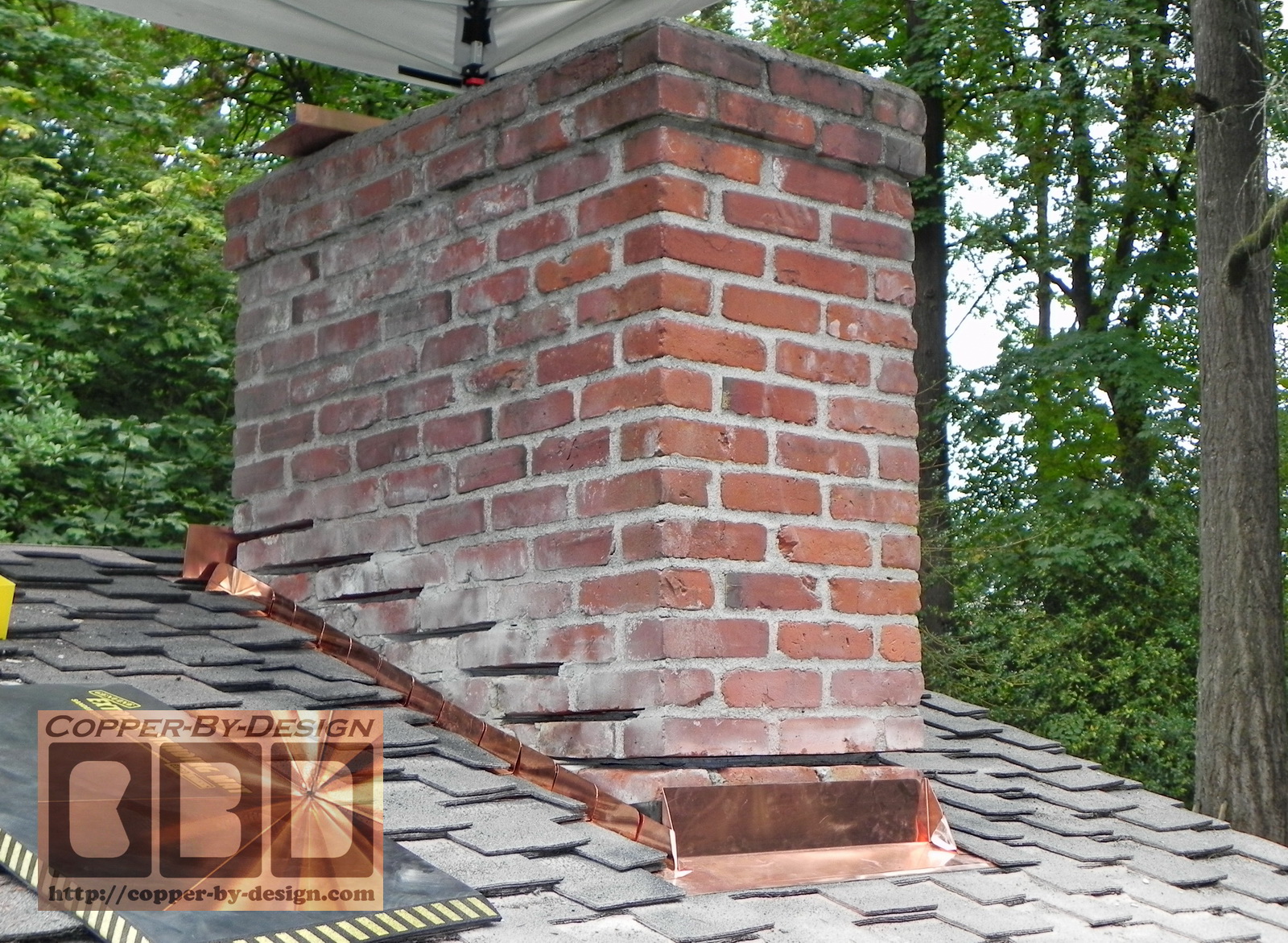
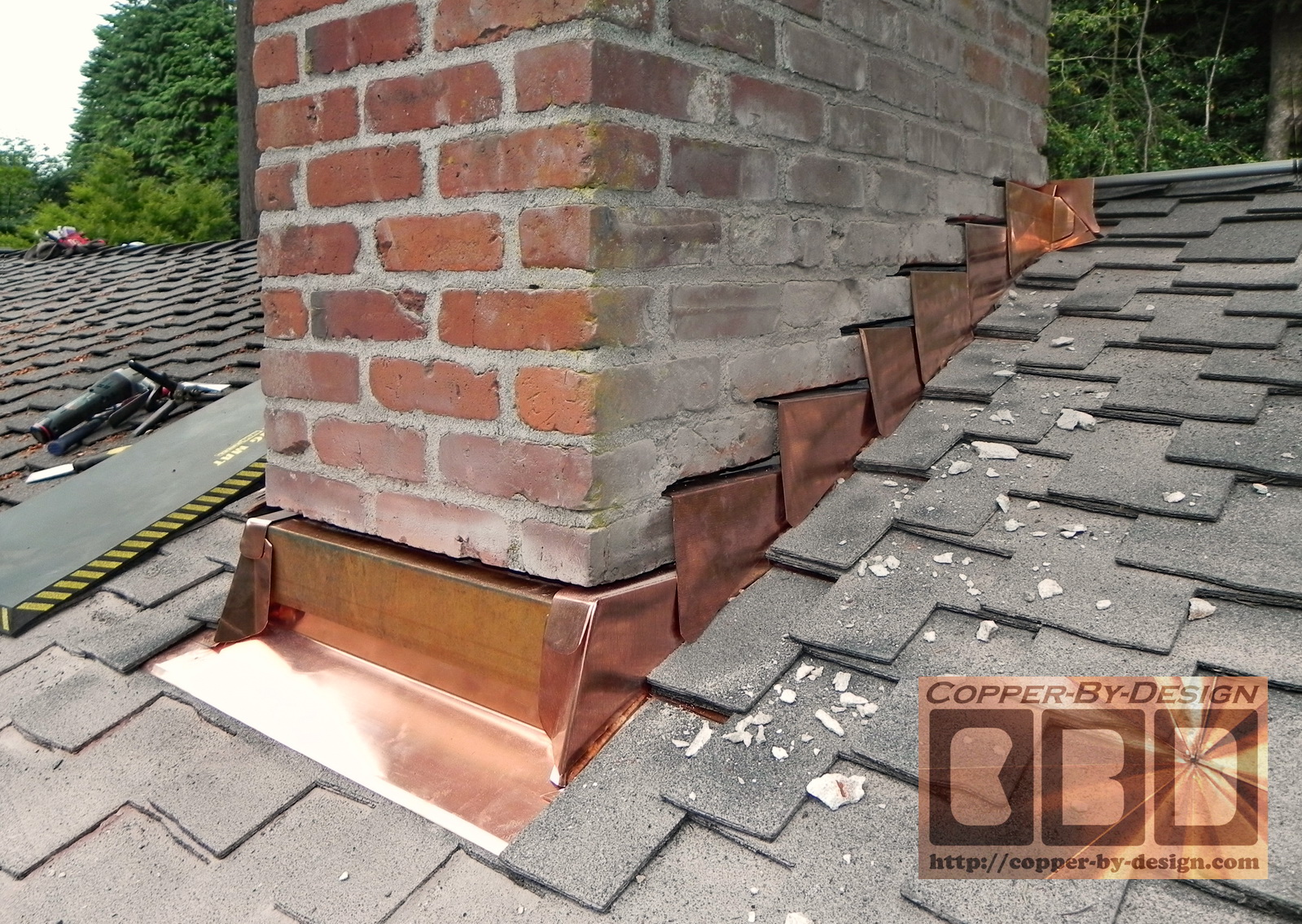
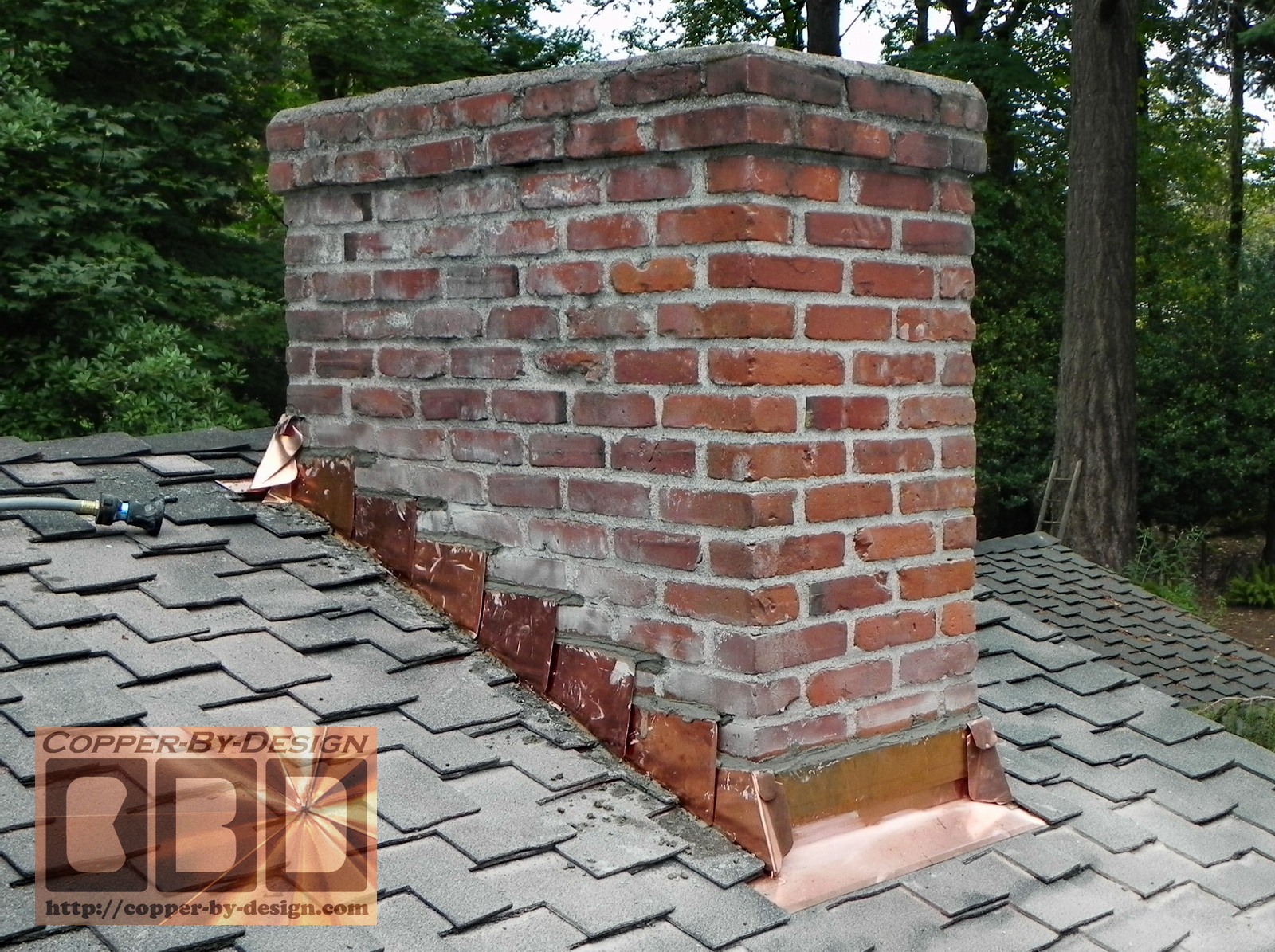
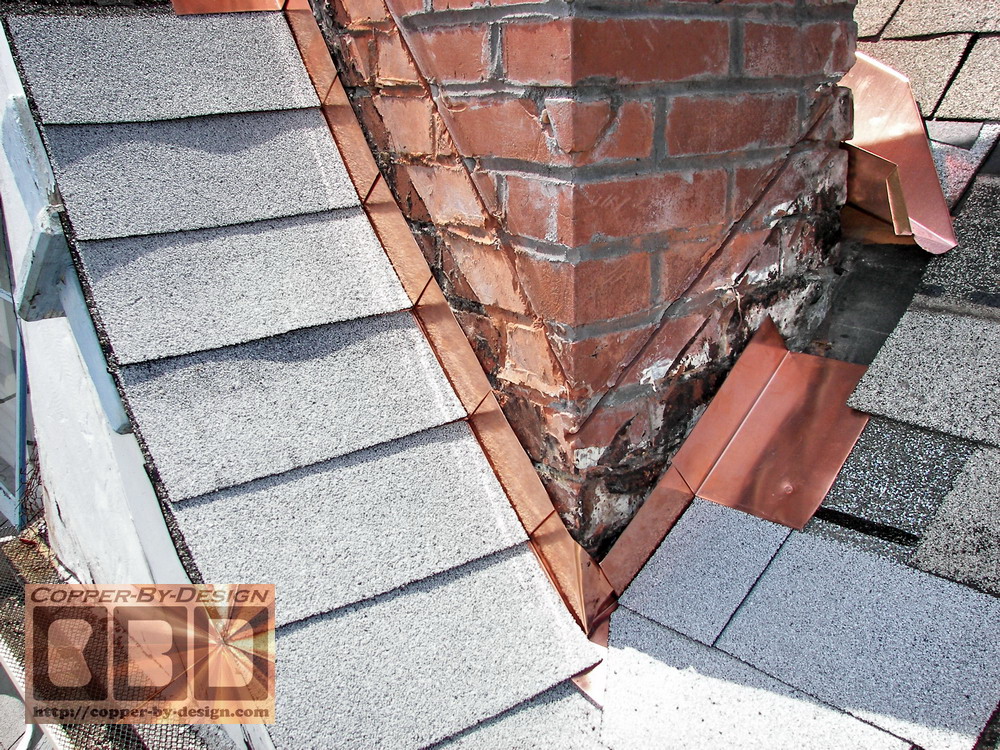
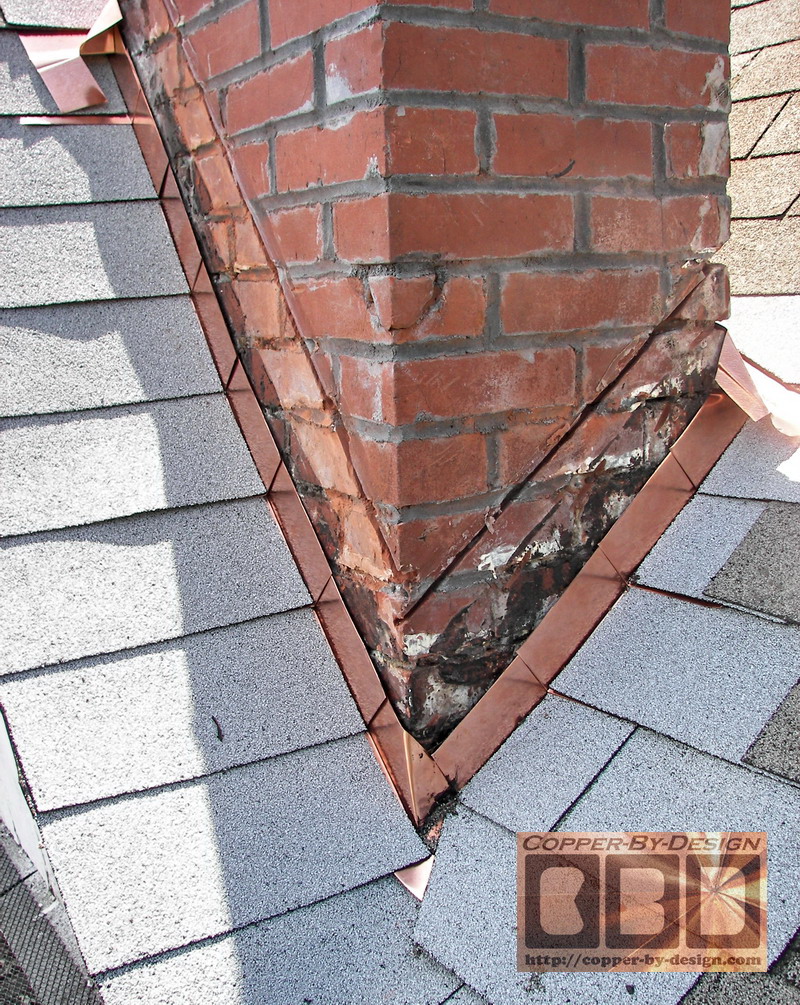
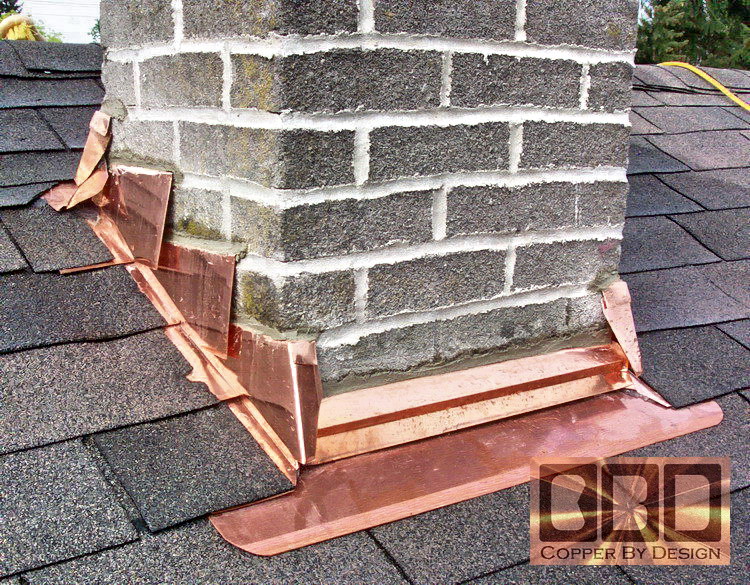
This re-flashing was done by a client with a copper flashing kit I custom made for him

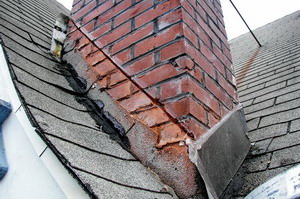
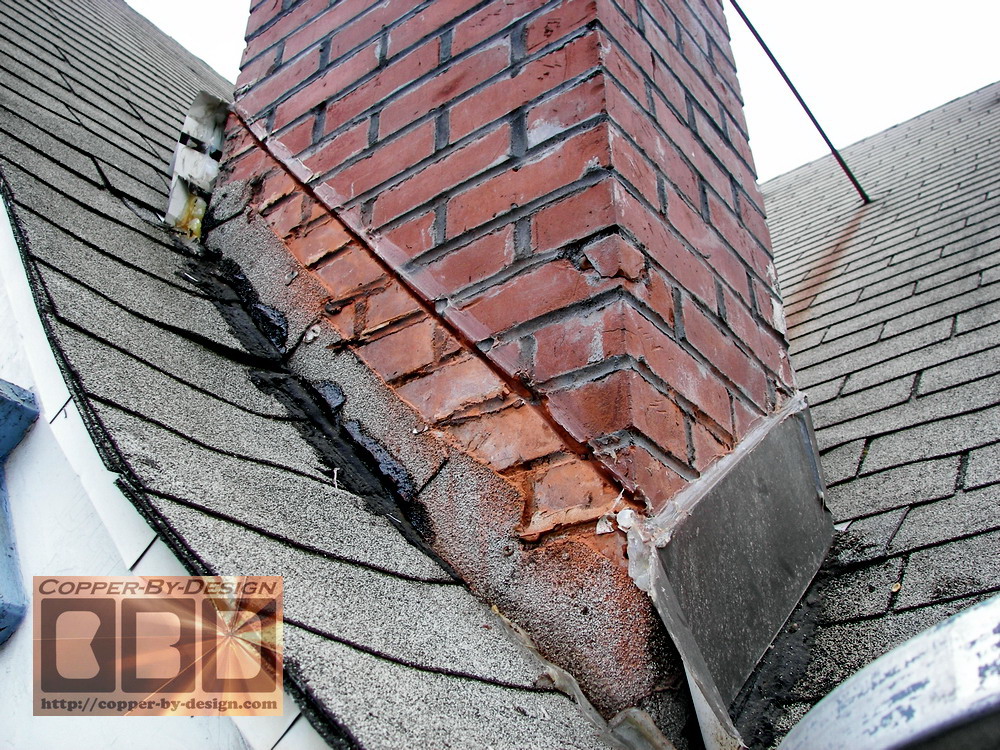
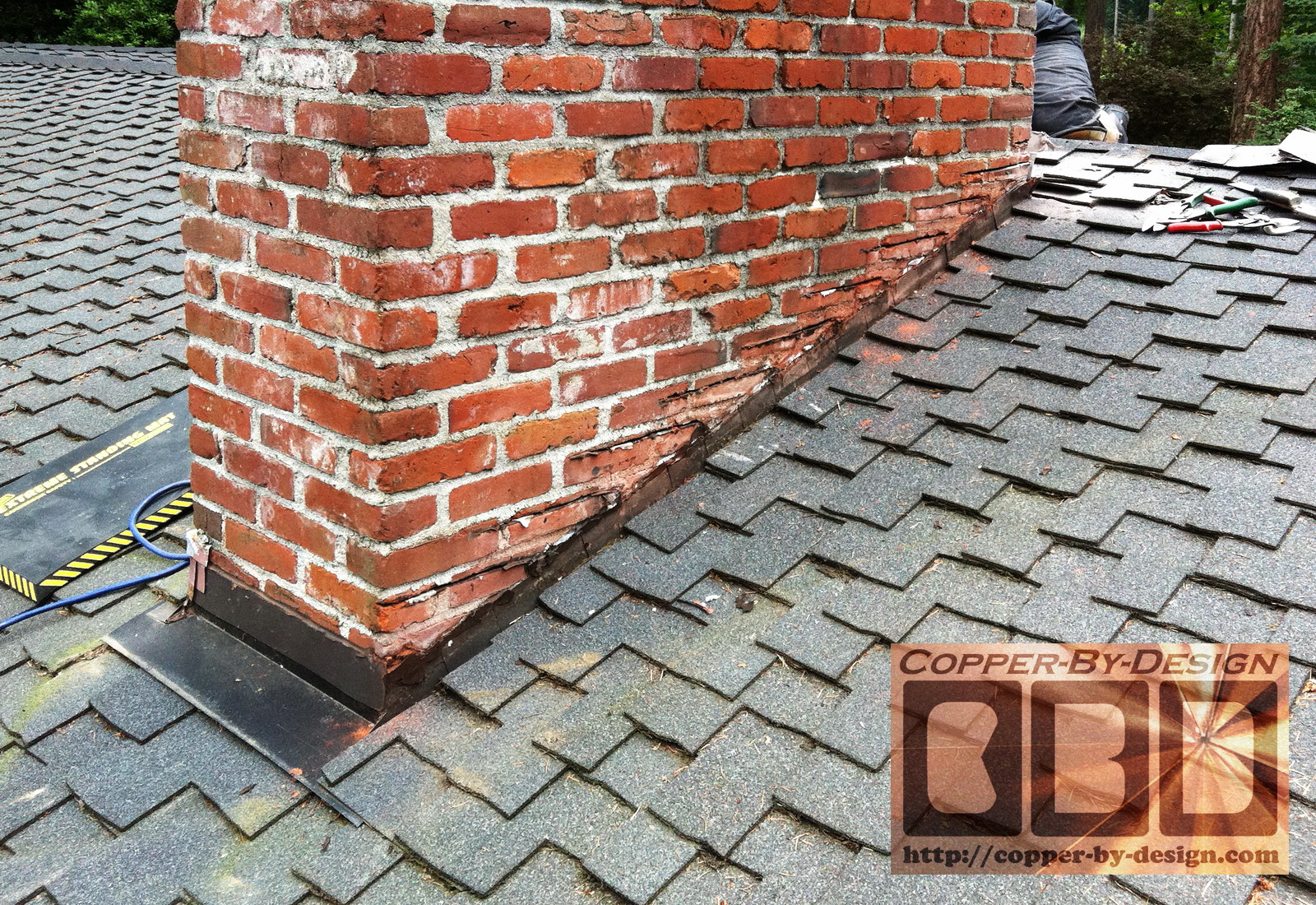
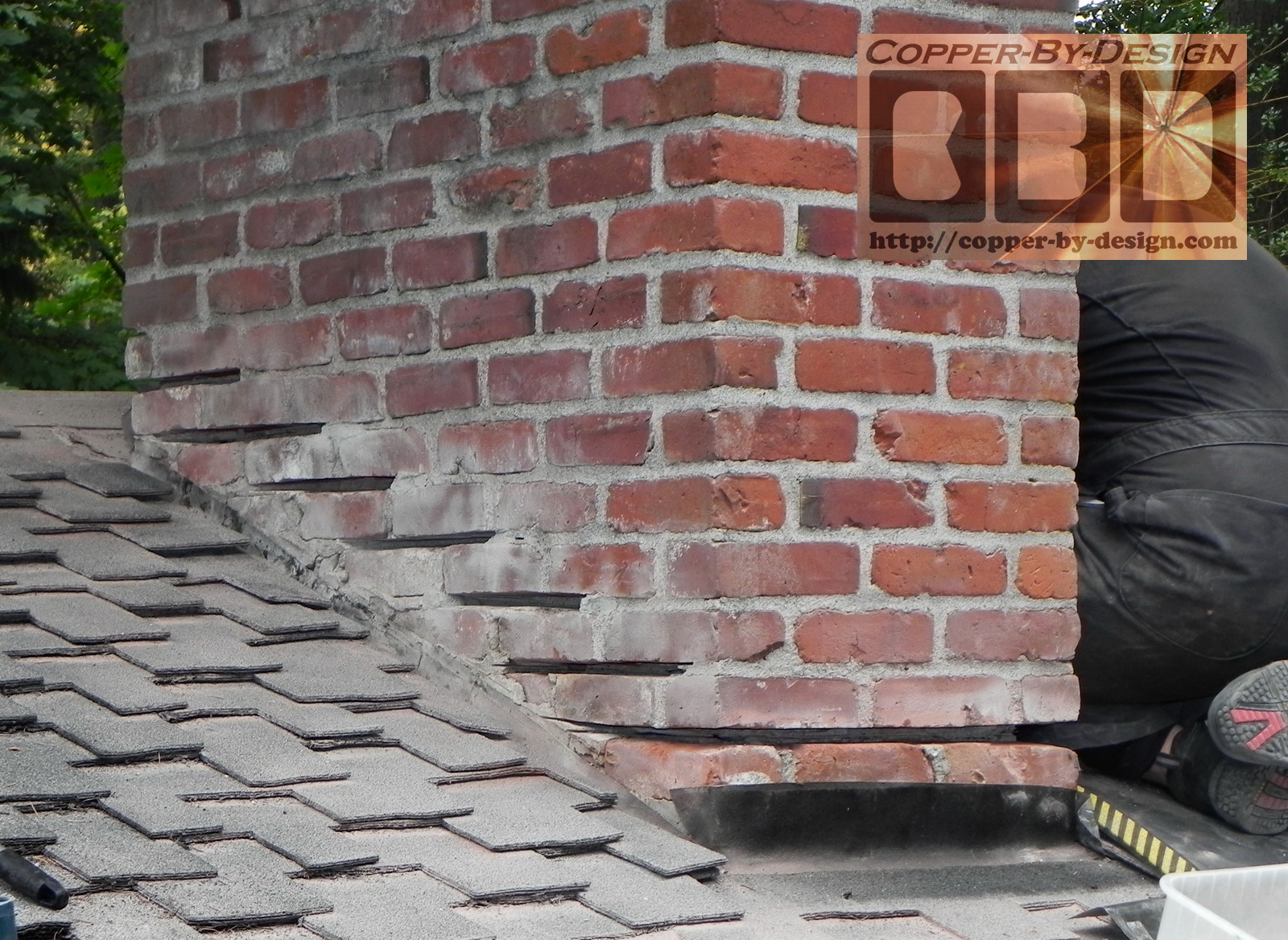
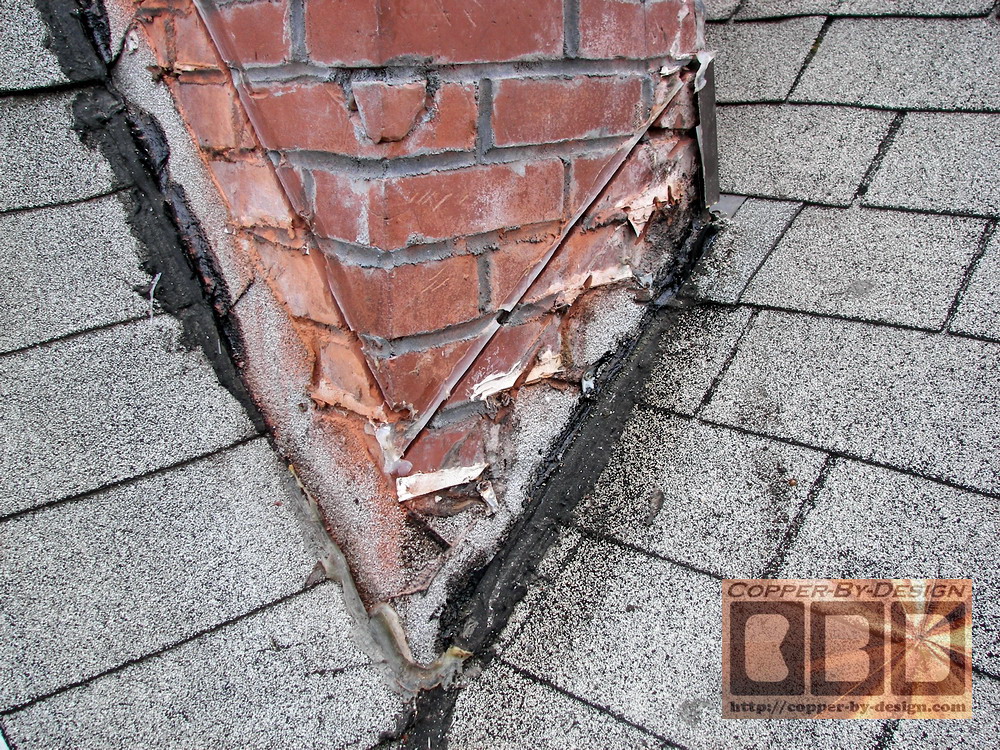
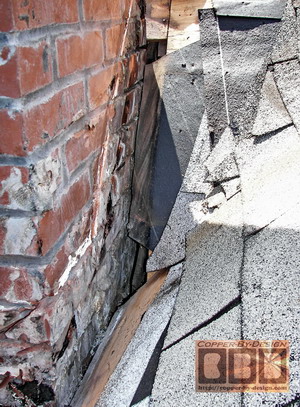
The most common mistake I see roofers do when they do bother to re-flash a chimney is to cut a shallow grove along the diagonal sides of the chimney to caulk a straight piece of flashing in, but will not stick for long to the crumbly bricks and old mortar. Although that is not the worst problem; this sets up a fracture point for the chimney to crack and possible collapse in an Earth tremor. I have seen lots of evidence of this happening. So if they do this to your chimney; they have permanently damaged the chimney and the only solution would be to rebuild the chimney down to the roof line with ne bricks. If this has not yet been done to your chimney, you need to warn your roofer that you will require them to rebuild your chimney if they do that.

Even high quality caulk should never be used to attach counter-flashing, since it is just rubbery and adds no structural strength to the compromised chimney. Just as with the useless effort of tuck-pointing a chimney to make the mortar grooves look nice again; the new mortar in such a shallow groove has only the old crumbling mortar to stick to, so it will simply fall out within a few years. These groves need to be ground out a lot deeper than just 1/2" and only filled back in with mortar.  The groove needs to be at least 1.5" to 2" back to be deep enough for the new mortar to adhere to the top and bottom brick.  Anything short of that is a waste of time and money.

Over the last several decades so many roofing contractors were too cheap to spend a few extra dollars on  aluminum flashing, so the suppliers decided not stock it any more.  It can be special ordered from a fabrication shop like mine, but of course that makes it just that much more expensive than mass produced supplies.

My Roofing web page at: http://dmr-gutters.com/rf/roofs.htm goes into more detail about these terrible issue.  So don't leave without reading it over. It will help you can save yourself a great deal of wasted cost and anguish down the road.

Can You Make Us a Custom Copper Chimney Flashing Kits:
For more information regarding these custom chimney flashing kits for many clients across the Country go to my other web page for more details:

http://copper-by-design.com/cc/cf-kits.htm


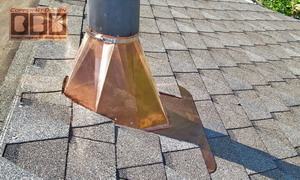
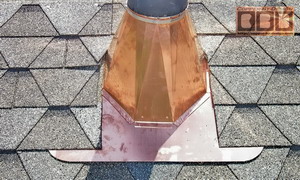
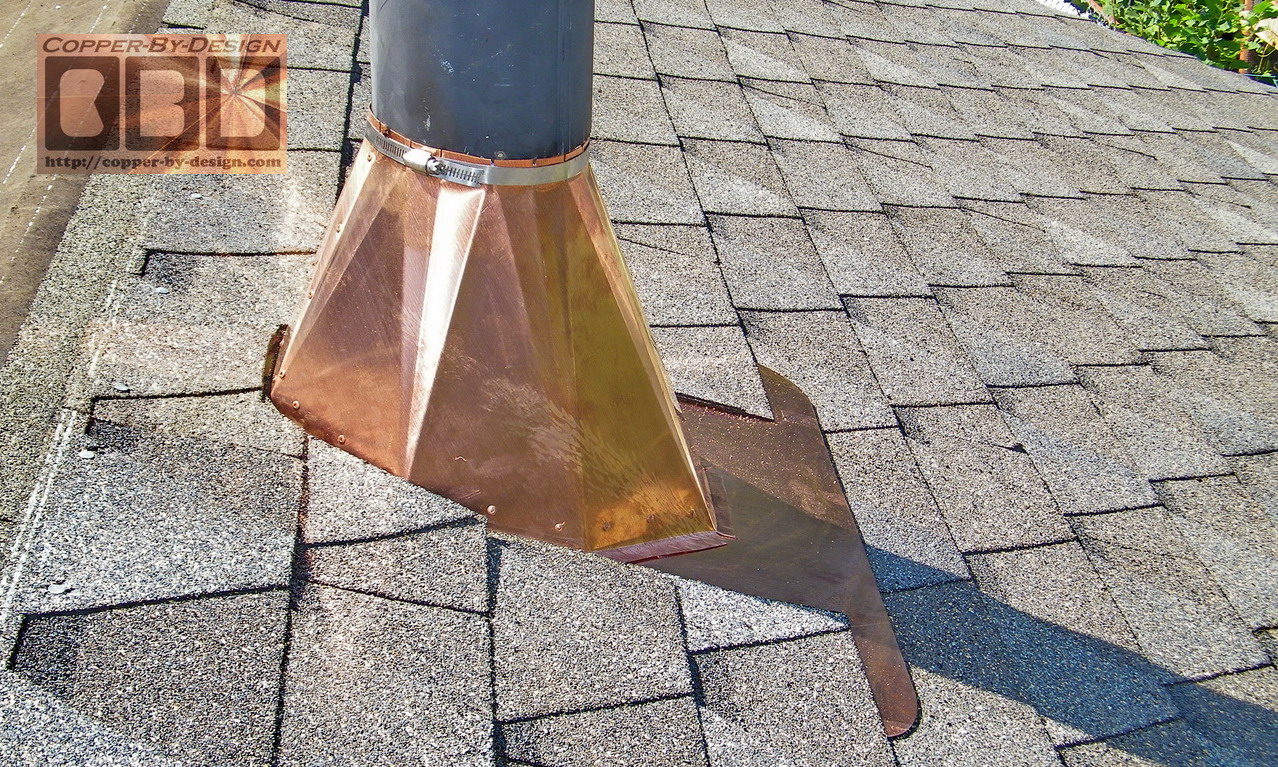
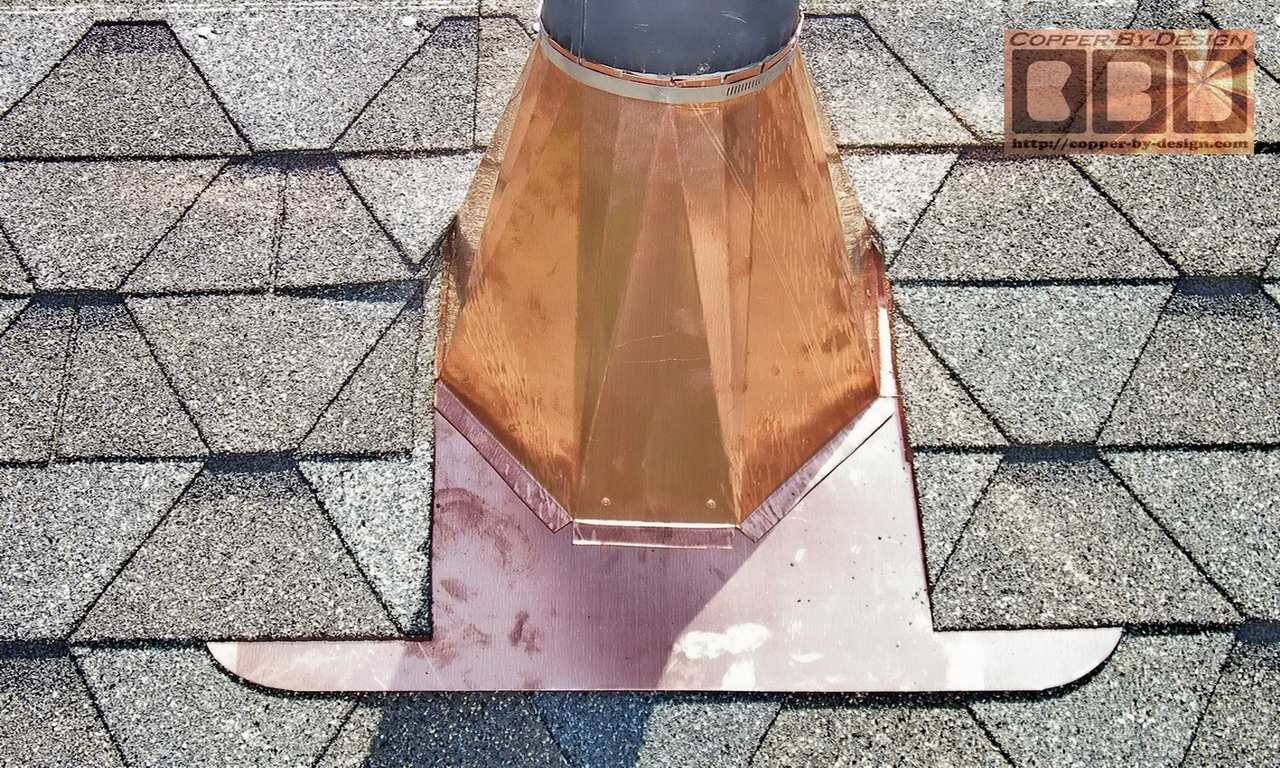
Chimney Flue Pipe Flange and Flashing

What If I Already Have This Kind Of Shoddy Workmanship On My House?
If you are are a victim of this unethical business practice; you can show the contractor this web site. Then you should be able to deduct the cost of repairing your chimney and it's flashing even if you are going to do it yourself, plus the cost of cleaning off that black tar. I would encourage you to insist he has that tar removed and cleaned off by his workers as if it was never there. It is messy work and solvents on the roofing will damage the shingles and cause a terrible staining mess. If the contractor does it; he can then replace the damaged and stained shingles at the same time.

Do not let them talk you into any other alternative, trying to minimize the damage. They will try to discredit me and say I do not know what I am talking about, but it is simple logic they will not be able to BS their way out of it if you stand your ground. Roofers will claim that it can only be done this way when the chimney was first built by the brick mason, but I prove here that is simply not true.

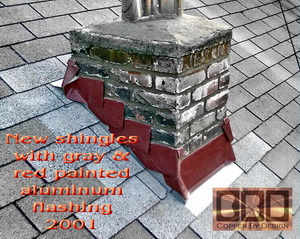
Below are examples of jobs we have worked on that show the shoddy practices that I've worked to repair.

Click on the thumbnails for a larger better view

.

.

Solid 20oz Copper Sheet Metal Chimney Step & Counter-Flashing Replacement
(you can click on each image to get a closer look)

Here is a step-by-step chimney re-flashing job I was hired to do along with the gutters on this rental back in April of 2004 for a client Named Toni Ferro located at 3953 S. E. Grant Street in Portland, Oregon.

When I was replacing the gutters on the house, I noticed that the two chimneys  were not flashed correctly and must be leaking into the house. You can see here the caulk they had used to try and seal the step-flashing to the bricks is not only peeling off and cracking from Sun exposure, but it could not have lasted even a year with even a slight difference of expansion and contraction between the wood structure of the house and the clay of the brick chimney that extend from the dirt to the roof due to temperature changes.  There was no counter-flashing to be seen here at all. I took a few digital photos of the chimney flashing to send to the Landlord through e-mail to advise her of this problem and go over different options.

Besides the failing caulk, you can see the flashing is rusty and would not have lasted much longer, but the most serious problem is the missing counter-flashing.  She saw the wisdom of re-flashing it as soon as possible and mailed in a half down deposit to schedule this in.

I had to wait for clear weather and when I was not in the middle of another project, since the roofing needs to be torn up for a time to rip out the old rusty steel step-flashing. The right photo shows as I'm in the process of scraping off the old tar from the surface of the bricks.

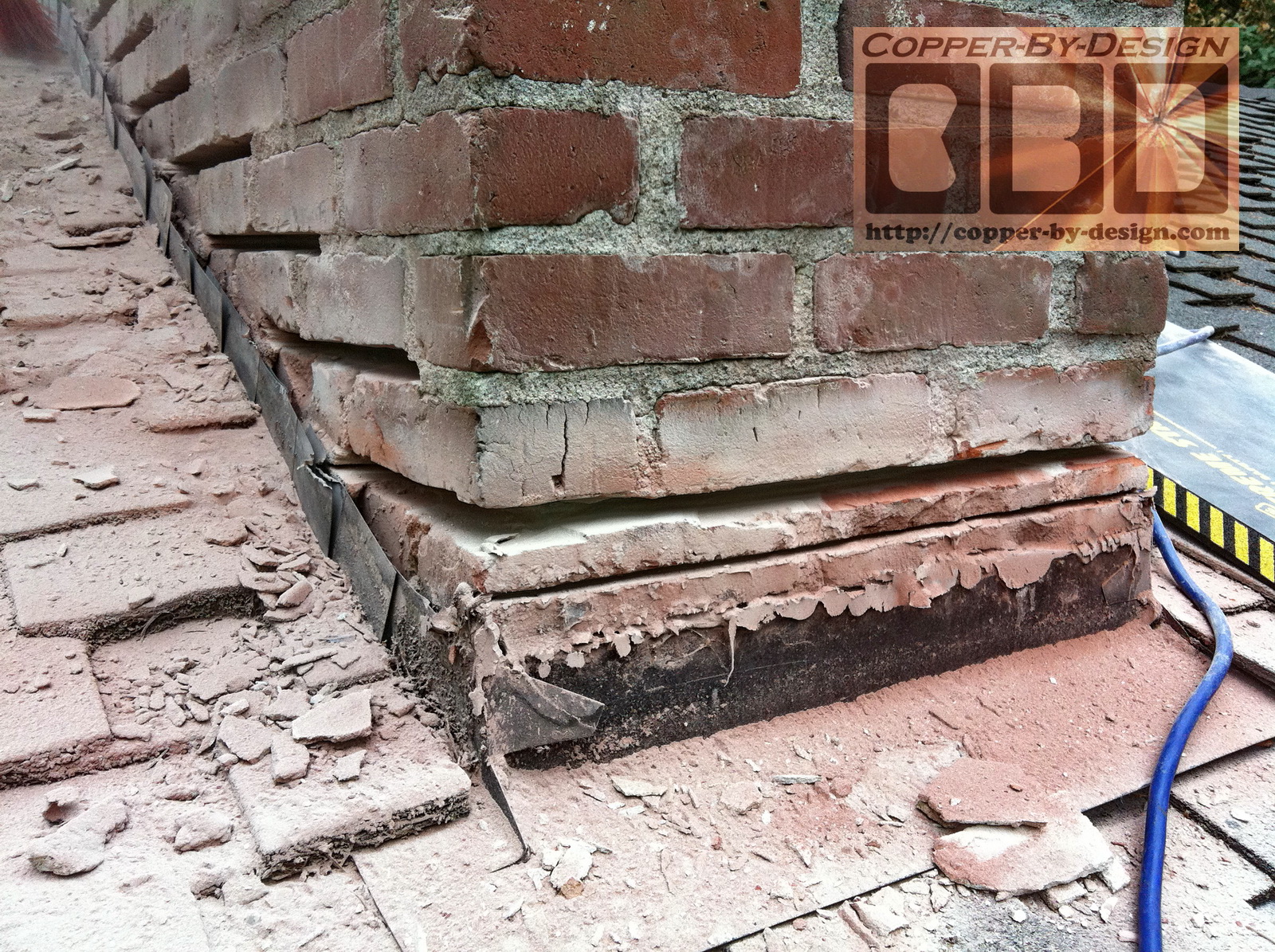
These photos show the old steel step-flashing removed.  Parts of the original counter-flashing were still in the mortar joints, but had rusted so badly that it had broken off and still needed to be removed, so it does not interfere with the new copper flashing.

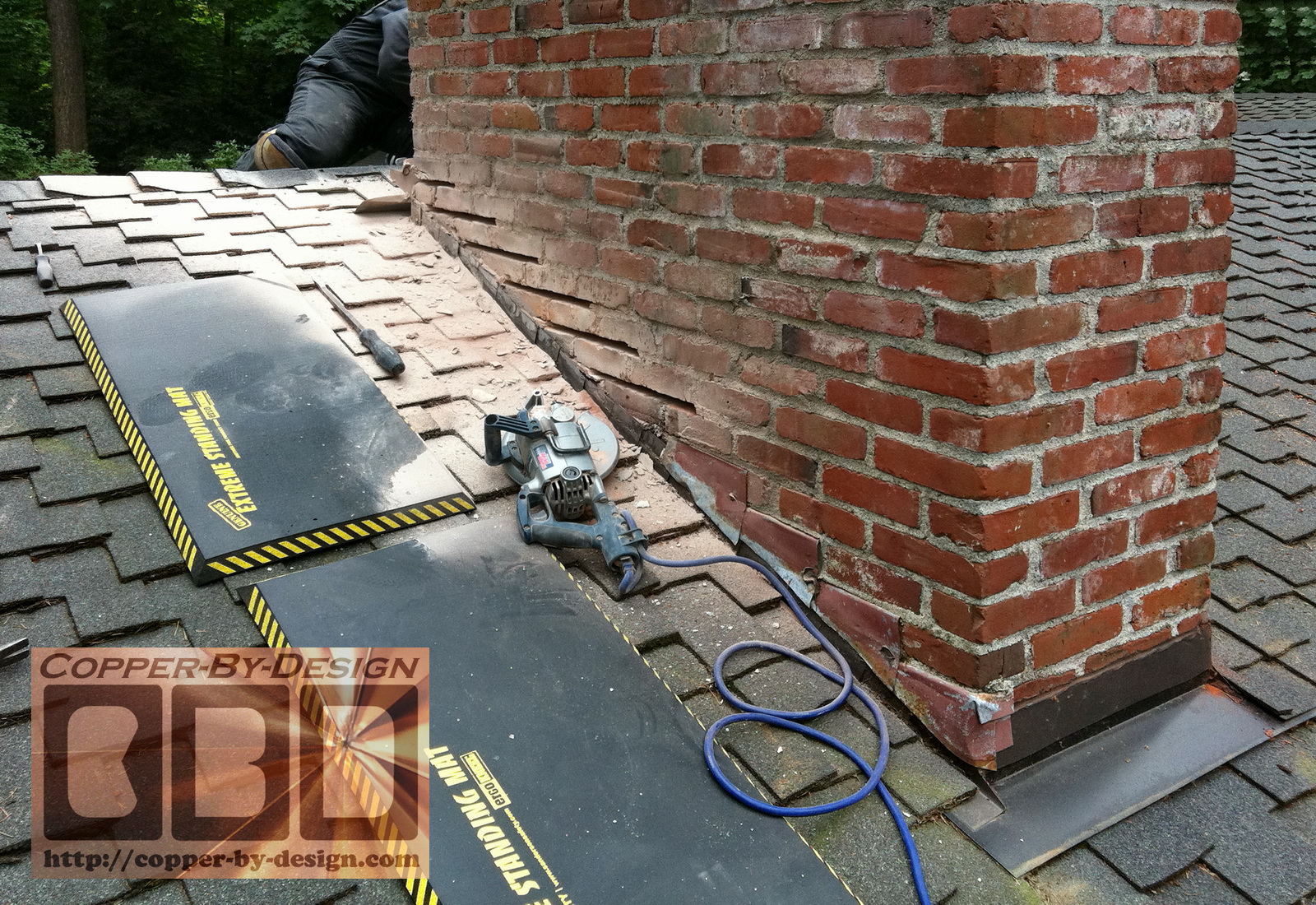
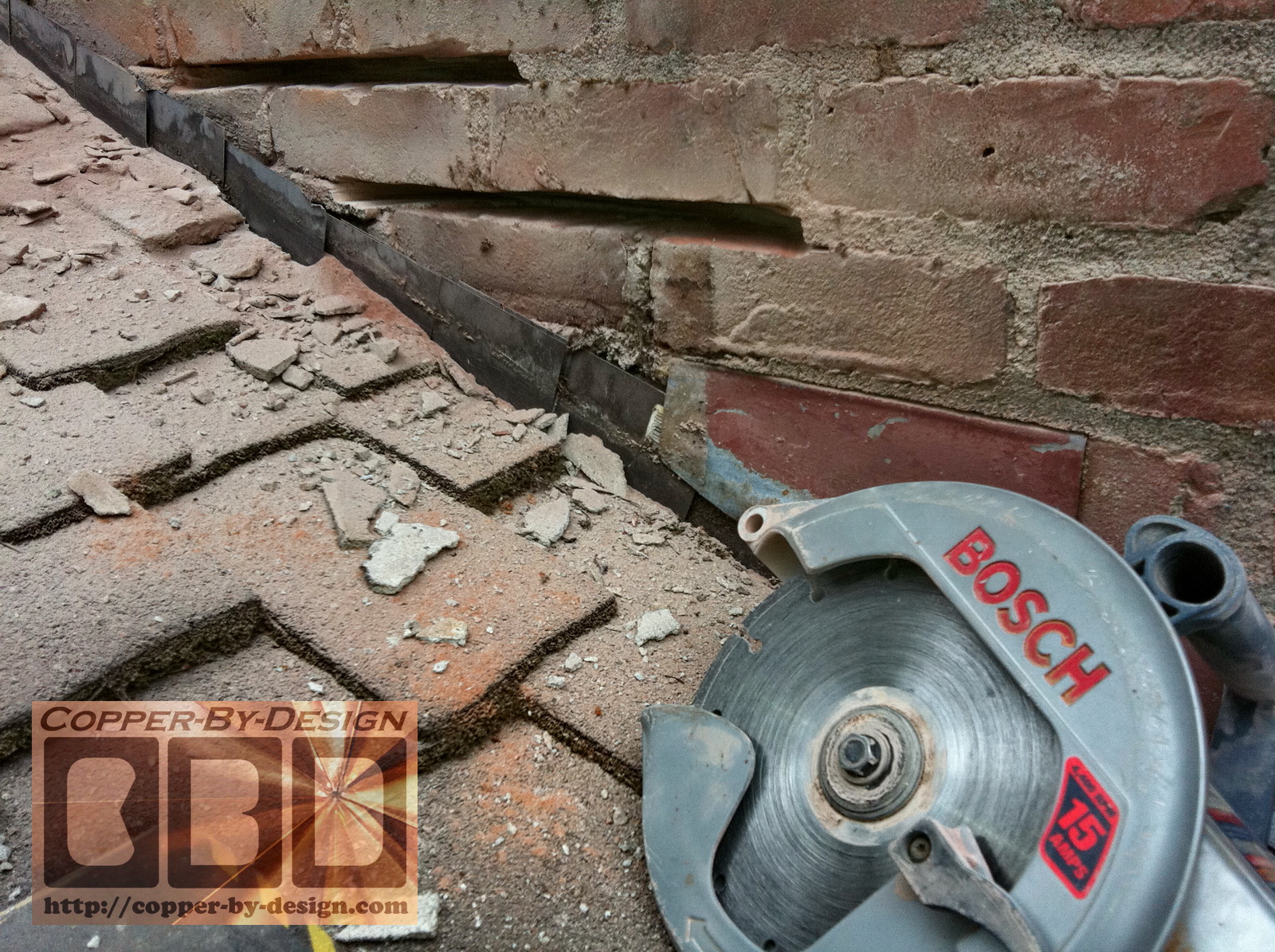
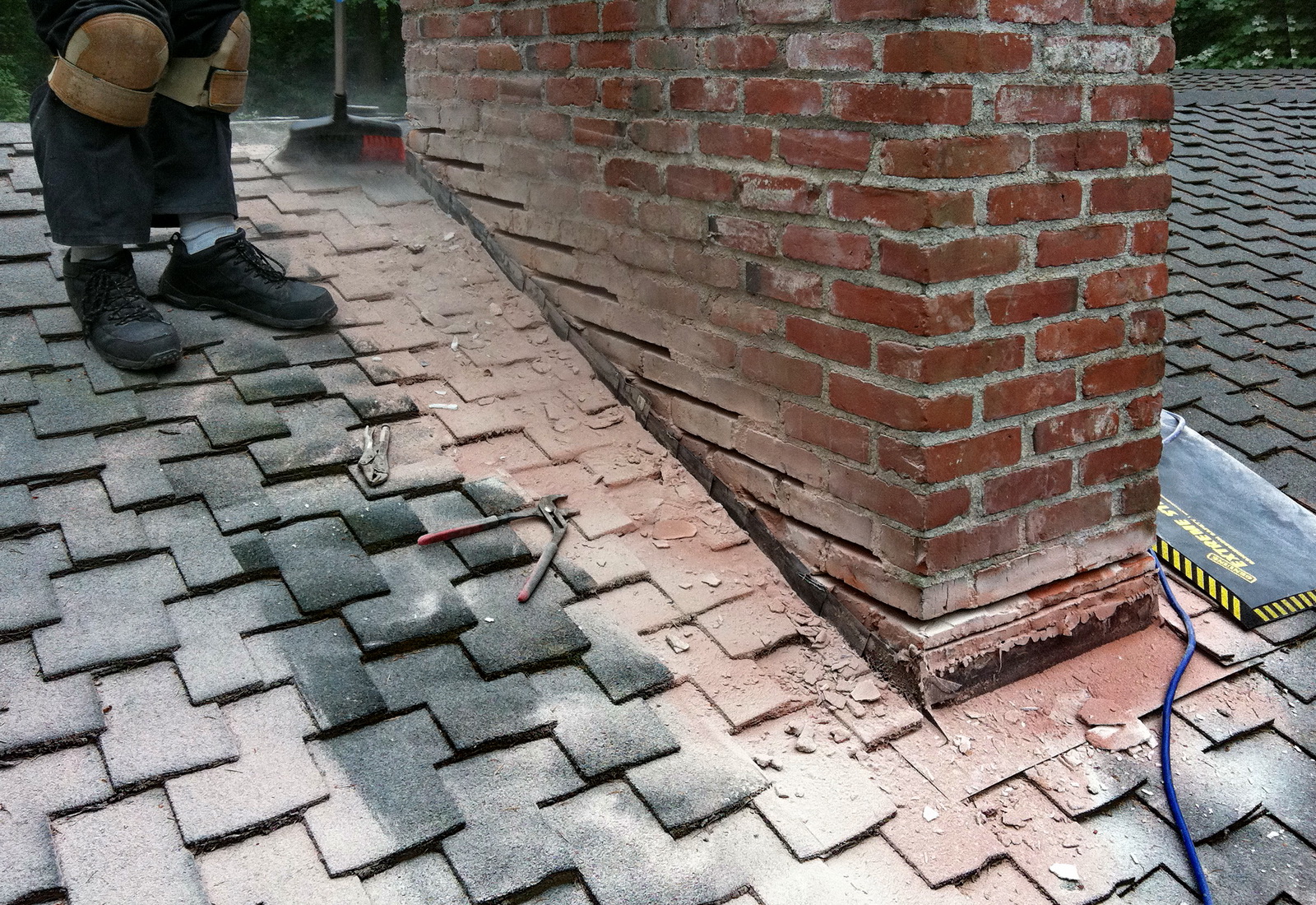
The right photo shows the mortar grooves are ground out in between the bricks in preparation for the new copper counter-flashing.  I use a 7.25" worm drive circular saw, with the flat work plate removed, so I can grind in tight to the roof with these cuts into the chimney mortar joints.  The cuts need to be about 2" deep. Enough to remove the old rusty flashing out of the chimney, but not further, as the bricks are only 4" wide. I must be careful with this or the chimney could collapse under the weight of the bricks above, but so far I've not had any chimney collapse from this extraction work. Most bricks seem to be 4" wide, so that leaves at least half of the old mortar to continue to support the weight of the bricks above these cuts while I am working on this. Out of a hundred or so reflashing jobs I've never had a chimney collapse on me, but I imagine it could happen when I've see old mortar is so rotten that I could dig it out  all the way to the inside with a pencil, so it is best to be mindful of that possibility. Especially if the mortar is that soft and crumbly.

Here it is from the other side. As you can see it makes a huge dusty mess that can be dangerous under foot and harmful to your lungs.  I have to wear a filtered face mask and safety goggles while doing this grinding work. I notice that with all the mortar dust in my hair afterwards it is not possible to run a comb through it (ick), so it is best to wear a hardhat or some other cap. It will wash out just fine with ordinary shampoo, but it will seem worse than you have ever known your hair to be.

On the right shows the 20oz solid copper sheet metal step-flashing in place, nailed down and hidden under the shingles on the sides. I use 1.5" copper roofing nails.  It is also caulked in the corners and the copper is folded over on the corners to also shield the caulk from the sun.

Here is shots showing the counter-flashing test fitted and custom shaped and set into place before it is going to be mortared in. The light green foam cushion pad you see in the back ground is to sit on while I work.  It is not that I am so spoiled that I need this comfort.  It is because it protects the roofing shingles from my work boots chafing the shingles, especially on a hot day.  It also is a safety issue, as it make me a lot more stable on the angled roof.  Another added benefit is how it keeps me from wearing holes in my work clothes so fast. Shingles are very abrasive, like sandpaper.

On the left shows the counter-flashing mortared into the gaps I had cut in the sides of the chimney. I first shove the mortar into the joints with mason tools starting with the bottom sections working my way up one grove at a time. I can only do one grove at a time, shoving the flashing into the mortar as fast as possible before the mortar quickly sets. The top and bottom joints are especially hard to do quick enough before the mortar gets too stiff to be able to press the wide counter-flashing piece in. I often have to tap it in with a rubber mallot even on just a small chimney like this. Some clients have asked about using lead, but I do not know how I would be able to get it in if the fresh mortar when the more rigid copper is so difficult. I believe that would only be possible while the chimney is first being built. I still do not believe it would be a good idea to use lead for the counter-flashing.

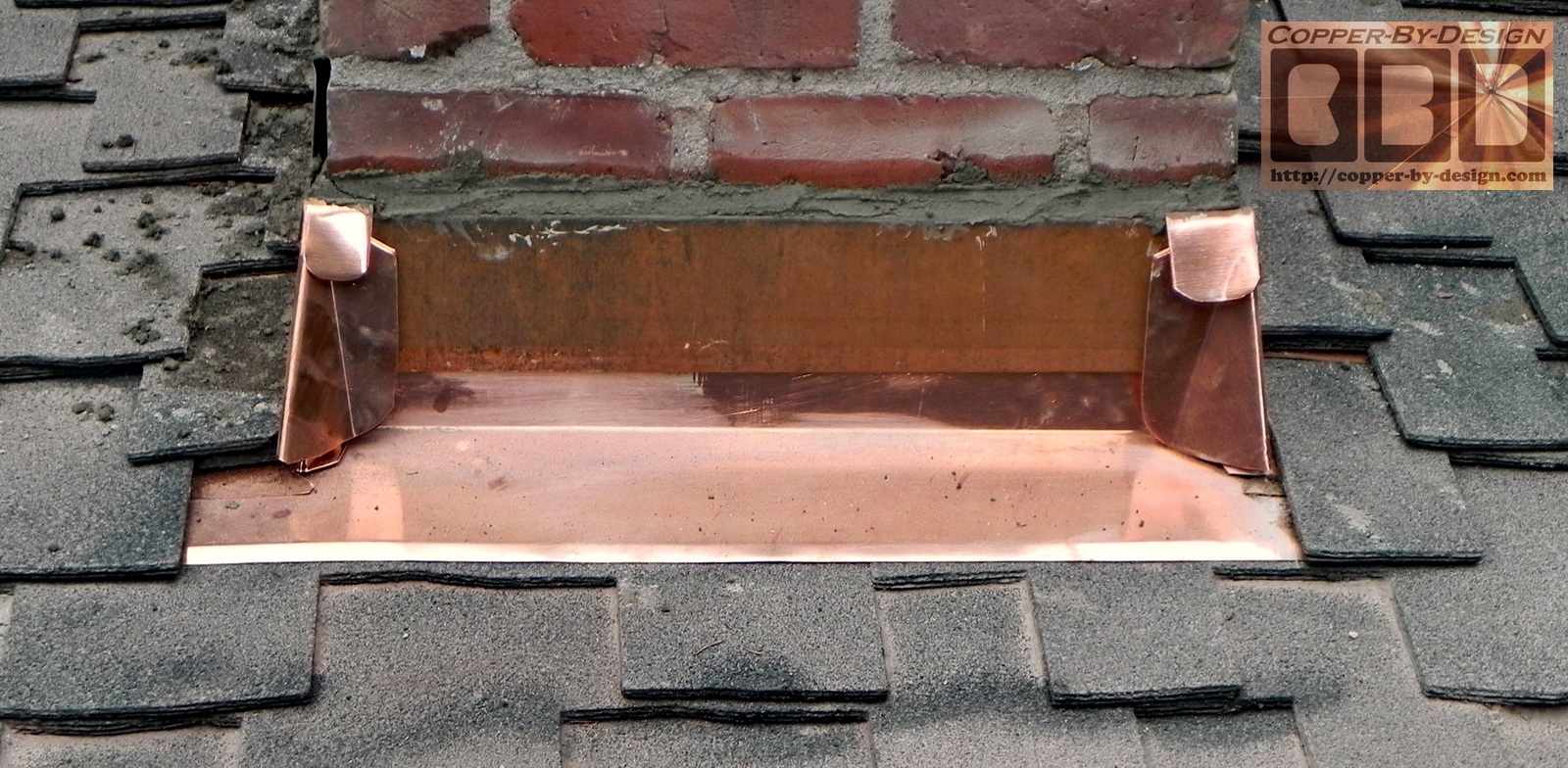
This is the chimney from the back side. It is important that there is this two part flashing with a good 1/2" gap along the bottom of the counter-flashing, since the chimney is founded in the floor of the basement, and it will be expanding and contracting differently than the wood structure of the house, so it needs to be able to move without binding up. It would have been best to have built a cricket to divert the water and debris off to both sides of the chimney, but that would have added over $150 to the cost of this flashing project. Since this was just a rental I knew she was not wanting to invest any more than she had to.

The worm drive saw seen in the roof valley below to the right is what I use to grind out the mortar joints. The base plate has been removed to be able to get in close the the roofing. Side motor saws will work fine on one side, but the motor would be in the way on the other side. The grinder tools they sell do not have a larger enough blade to get in deep enough for this work and too thick to cut above and below the old metal flashing that has to be removed.

The shingles are wet from hosing down the mess after I had broomed of the bulk of it. A plastic and a wire brush with hydrochloric acid can be used to clean up left-over mortar smears to leave a nice clean job.  The acid will need to be diluted, or it will be too caustic to the worker for use.  One part to ten parts water is plenty strong still.  It is also helpful to clean the mortar off of the shingles.  Be sure to use protective gloves.

Buyer Beware:
I've seen other contractors charge over $750 just to counter-flash a single flue chimney with cheap steel over a decade ago. Back when copper was half the cost and gas was only $1.30 a gallon. The cost should not be more than $750 to re-step-flash and counter-flash a single flue chimney with parts and labor using 20oz copper. To use cheaper steel or even aluminum would save them only about $75 these days, which is only 10% of the cost of their work. Even if they would make you pay and extra $100 it is best to have them use the thicker 20oz copper. If they tell you they can only get 16oz copper, then you know not to hire them, because they have already lied to you.

You will even need to double check their materials before it goes in, or you are likely to get a thinner copper or just painted steel used, and by then it is too late. I have seen contractors use a steel that is just painted to look like untarnished copper. If it attracts a magnet at all, it is not copper. I've never seen copper plated steel, so do not fall for that ploy either. The Sun will bake off that thin layer of paint and it will rust within a decade or so.

One of the only ways you can know for sure the right material is used is to have me make up a solid copper flashing kit for you, and have them use that instead. Then discount you for the difference in cost.

It is sad state of affairs, but it seems few experienced roofing contractors even know how to do this right, or are willing to. The basic logic of rain management seems to escape them. Even when they have an example there in front of there face to see how it is to be done on most chimneys they come across. Most roofers will claim that it can only be done that way when the chimney was first built, but as you've seen here I prove that is simply not true.

You would do well to compel your local roofing contractor to read over these web pages and finally learn their craft.  They may take offense to this suggestion, and especially this web page, but that is very telling of their lack of character and you would do well to take that as evidence they cannot be trusted to have your best interest in mind and you should not hire them. The overwhelming evidence here shows this is a simple fact of reality that cannot be debated. Here is a Word 'doc' file to print out with the recommended list of tools and more details instructions:

http://copper-by-design.com/cc/Reflashing.doc


.

More Examples of Copper Chimney Flashing & Cricket Diverter Work

Bassett job - classic cream aluminum gutter job w/screens, and this chimney flashing (8/05) $2,790.65
3036 S. E. Salmon St., Portland, Oregon

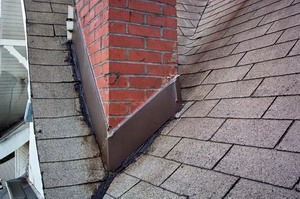
This brown painted steel counter-flashing may look nice and clean, but it is only a good example of atrocious work. Let me explain. Beside the issue of leaks and dry-rot, when they cut a diagonal line like this through the bricks they have permanently damaged the chimney and made a fracture point to crack during an earthquake, which has been proven to cause chimneys to come crushing down and smash cars that were parked below and lots of other damage. That rusty pipe brace will not stop it. There is over a ton of bricks over this roof line. How much damage do you think that could cause?

The clients were not in a financial position to have the whole chimney rebuilt from the roof line up, so I did what I could to salvage this mess. It was surprising how easily the caulk came off the bricks when I pulled these flat steel panels off the sides. It clearly would not have lasted very long. I then found out how the roofer had not bothered to even step-flash around this chimney. I stripped it down and scraped off the tar.

I stripped it down and scraped off the tar. It was quite an ugly mess, but I did the best I could up on top of a 2 story high ladder leaning over this steep roof. The shingles on this side had to be replaced with new felt paper and shingles before I could start to attach the new step-flashing. as you can see in the right photo this chimney placement was not planned very well to be set right at the base of this roof valley. It would collect a great deal of debris that would get pounded by this river of water coming down from the 15' long valley above. It was very hard to get my grinder in this area to cut the groves for the new counter-flashing. Heck, it was a challenge to just get my hammer and crow bar in there just to remove the nails holding the old shingles down.

These shots show the new shingles and copper step-flashing in place.

You can see here how I made a special custom tapered pan at the base of the valley to help channel the water and debris off to the side of the chimney.

I did my best to fill in the diagonal cut with mortar and cover most of it with the new copper counter-flashing pieces. This may not look as clean as the other steel flashing was, but it is a huge improvement functionally speaking.

Viges - jacked up porch, fascia boards, ABS pipes, copper gutters, copper ridge caps,
roof cleaning, both chimneys re-flashed, fence repair w/2x12 shelf  $10,940.96
2505 N. E. Jarrett St, Portland, Oregon

These shots again show terrible flashing work. The chimney below also was missing the counter-flashing.

I just made a minor tapered cricket pan for the upper side of this chimney to help divert the water and debris off to the sides, but it should have had a cricket that at least matched the 6/12 roof pitch, but I  had added this detail at my own expense after I had already bid this work w/o any cricket.

The picture below exhibits the way most roofing contractors deal with chimney flashing, by just smearing tar around the base that meets with the roof-line.

Other roofers poor flashing work

Instead of re-flashing the chimney like it was done originally, they smeared this cheap goo around the part that meets with the roofing shingles, even though it is not work that would be approved by building code or inspectors.

This cheap goo is called mastic or fibered roof tar.  It is the cheapest of caulks, since it costs around $5 a gallon.  The cause of this problem is that most re-roofing projects are not required to file for a building permit and therefore called on for inspection, since they are not making changes to the structure that can be taxed. 

This chimney was not re- flashed the last couple times it was re-roofed.  In fact, it was not re-flashed since the house was first built some 80 years ago.  This is far too common.

To put this in perspective, the caulk we use to seal gutters costs 16 times the price of this mastic garbage.  Mastic is well known to dry out and crack within just a few years.  The old rusty flashing you see at the bottom right had come out of the mortar joint.  The mortar was so crumbly that the bottom counter-flashing fell out while they tried to seal it, so they bent it down over the new roofing and nailed it down.  Then they just spread the mastic over the gap.  At the top left it shows the rusty counter-flashing they left and worked to cover up with more mastic.

The chimney of this 3 story house with a basement will expand and contract differently than the wood structure.  It needs to have a 2 part step-flashing/counter-flashing, so it can move in relationship to each other and still maintain the seal.   This chimney did not even have it's old counter-flashing left to rely on, since it had rusted through.  As you can see here, it has started to crack from the wear and tear of the sun and elements, as well as the movement of the expansion and contraction. 

Upon inspection we found 2 layers of wood shake roofing under the shingles, and the last roofers had removed one layer of composite roofing to be able to legally re-roof.  He had just re-roofed right over the wood shakes all over again.  These old cedar roofing shakes were very brittle.  They are as easy to snap across the grain as balsa wood, and they break with grain even easier.  The roofing nails or staples have very little to grip, where plywood has alternating grain with each ply.  Plywood will grip the nails 4 times tighter.  The flashing under all of this was so rusty, it could not hold out the rain, and the mastic had separated.  Here we have removed all the old mastic and rusty flashing, along with any damaged shingles

Here is the copper step-flashing in place.  One piece of flashing for each row of shingles.  We usually would use a clay red painted aluminum flashing, but this house has built-in copper gutters, so we decided it was best to use copper flashing on this roof.  The new copper step-flashing is nailed with copper nails under the shingles, and then has a 90 degree bend to go up against the side of the chimney.


The copper counter-flashing is then mortared into the old horizontal mortar joints that we cut into the side of the chimney while grinding in to remove the old rusty flashing.  It is installed just like the original flashing,  There is no other way to do this correctly. 


 This is the same chimney from the other side.  I have seen several roofers attempt to re-flash a chimney, but they did it all wrong.  It is really strange that they would do that, since all chimneys have a clear example of how it is to be done when they first built the chimney.  I have seen where they cut a shallow diagonal line in through the bricks and mortar, so they can simply put one straight strip of flashing along the side.  They will then attempt to caulk that flashing into the bricks instead of using mortar?  No joke!

Here is a wood and sheet metal rise to divert the water to each side of the chimney. Here again they did not replace it with the last two roof jobs.  I found another layer of steel under this one from the first roof job.  It had rusted completely through both layers of steel sheet metal.  The original contractor did well to build this rise above the chimney, but it was negligent of the last two roofing companies to not replace it.  Inspectors do not want the flashing to ever be reused, as it is not going to last the 25 years like the new roofing, even if it is not rusty.

This shows the old rusty steel pan removed, that was shown above.  This is the original wood from when the house was built.  It was necessary to remove several rows of roofing shingles to get all the steel out.  I also had to strip out a lot of wood shingles as well.  It is best not to leave the steel in there as it will reach negatively with the new copper riser pan.  The old rusty steel counter-flashing is still mortared into the chimney.

aluminum riser pan

Here is a brown and white painted aluminum pan covering a layer of thick roofing felt to act as a barrier from the nails that may work loose and dent or puncture the new copper pan yet to be installed.  We tend to be meticulous about such details.  We later installed 1/2" plywood to make up the space where we had to rip out the wood shingles in order to remove the bottom steel pan.  The plywood overlapped into the aluminum pan.  I then covered it with another layer of thick roofing felt to keep the aluminum separate from the copper.

Copper riser

Here is the new copper riser pan installed over the aluminum and two layers of 30 lb. roofing felt.  It is nailed in place with copper nails into the new plywood where they will be covered by the new shingles. You can see the old counter-flashing still.

Here are the shingles fitted into the new copper pan. Below is a close up of the vertical rise and cap to seal the center.  It was caulked on and nailed into place.

This picture below shows the new counter-flashing in place that has been mortared in.  Don't you think that looks a lot nicer than the old flashing?

flashingCopper flashing

Here is the side of that same chimney showing the flashing.  I have the exiting water from the pan extend over an inch past the side of the chimney.


Aluminum Counter-flashing Work (we use to do)

I rebuilt this chimney from the roof line up with all new bricks and clay red painted aluminum counter-flashing.  I thought it looks a lot better than the galvanized or brown painted steel that most roofers use (if they use anything at all).

The mortar was so crumbly that I was able to lift the bricks off with my bare hands.  Now days I would only use copper flashing. The black strap is to hold the television antenna up.

Chimney stepflashing

This is on a house in West Linn on Rosemont and Suncrest.  Tia and I also replaced the gutters and rebuilt this chimney from the roof line on up.  We later did the gutters on the house in the back ground as well.

It is important to make sure the top of the chimney is at least 2 feet higher than any thing flammable that is 10 feet or less away.

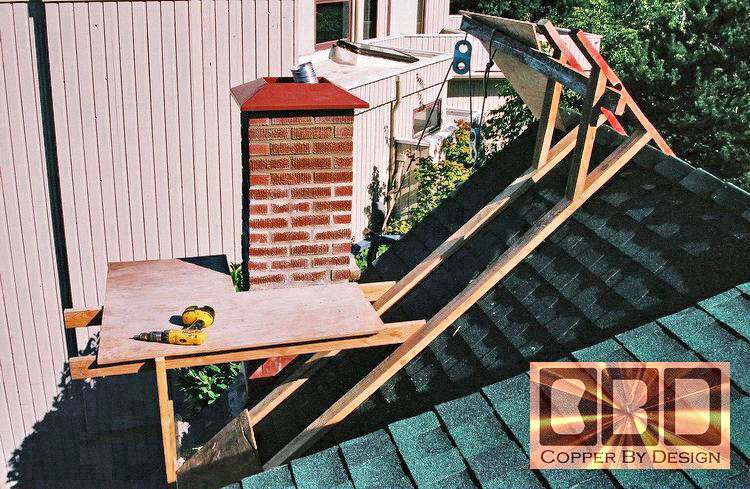
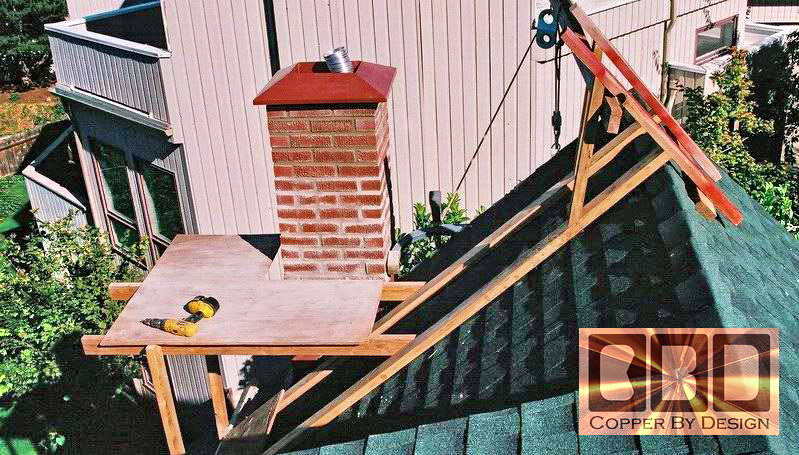
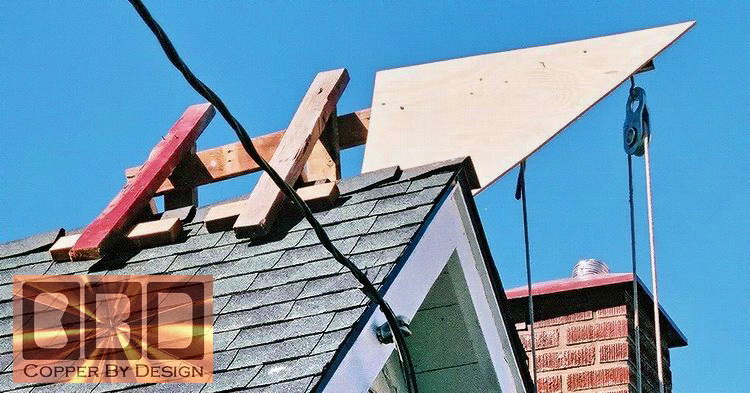
It is common that we have to build a special custom scaffold platform to work on that is strong enough to hold the weight of a worker, tools, bricks and a 5 gallon bucket of mortar.  It also needs to sit gently on the roofing shingles to protect them.  Sometimes this platform construction is half the work.  There is also a braced arm sticking out to the side with a rope and pulleys to hoist up buckets full of bricks and just mixed mortar. The whole assembly is custom fit and screwed together for easy removal when we are done.

For this top cover, the cement is formed near the shape of the cap, and then the cap is pressed and tapped onto it for a tight fit, so the cement fills into each crevice of the cover.

It also has the advantage of giving the chimney a real working drip edge.  It has galvanized screws pressed into holes drilled into the center section, and driven into the cement.  This way the cap cannot blow off in high wind. For a more permanent installation I would now have made this cap in copper in stead. This chimney is only used for a gas vent, so high heat was not an issue.

.

.


Aluminum Counter-flashing

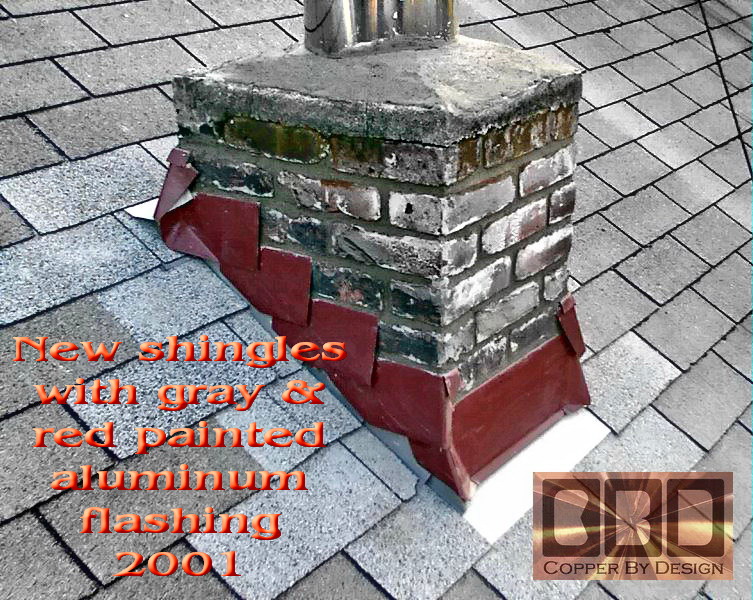
I was hired by Ms. Freewynn to re-flash this chimney with new clay red painted aluminum counter-flashing and light gray step-flashing.

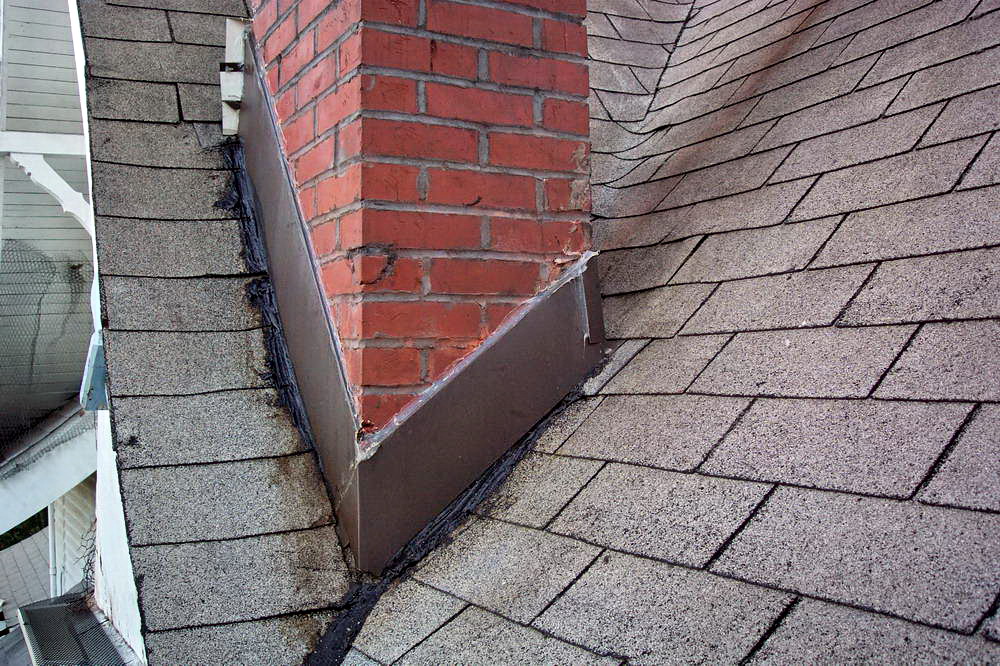
As you can see, the flashing was done very poorly with a thin aluminum sheet metal.  This flashing was just laid on the side of the bricks and mastic was smeared over the top edge to seal it.

This project took a lot of work to clean the old mastic off.  Another problem was that the aluminum flashing was simply resting over the shingles.  There was no step flashing.  I  had to also replace several of the shingles around the chimney, as you can see in the lower photo.

I step-flashed around the chimney.  I then cut into the mortar between the bricks to mortar in the new counter flashing.

Chimney stepflashingChimney stepflashing

I also added fresh mortar to the top of the chimney, at the base of the stove pipe.

As stated above, mastic is the cheapest of caulks, at only $5 a gallon. It has no UV protection and becomes brittle and cracks within a few years.  The sand on composite shingles is the sun cover for the petroleum product that the shingles are made of.


Helpful Roofing Information
For some valuable advice with regards to roofing and rain management issues check out our:

(a) Gutter Installation
(b) Gutter Debris Protection Options
(c) Roofing Quality Standards
(d) Moss Control & Treatment

web pages for answers and solutions that could save you thousands of $ and a great deal of anguish.

If you do find this information very helpful, feel free to send us a $ tip for the assistance we so freely have published on the web here for your benefit, like you might tip a waitress.  Heck, send us a gift certificate for a candle lit dinner for two.


Below is a photo of our
Better Business Bureau's
NW Business Integrity Award
for the year 1998

1999 Better Business Award

We were also a 1997 finalist for this same award. See our referral web page to see how we managed to be honored with this special award

Back to homepage
Homepage

Site Map

.

Company
Profile
Roof Caps Chimney
Caps
Scuppers Gutters Shipping

Contact Info

.

.

.

.

.

.

.

.

.

.

.

.

.

.

.

.


 copper-by-design.com